
 EN
EN
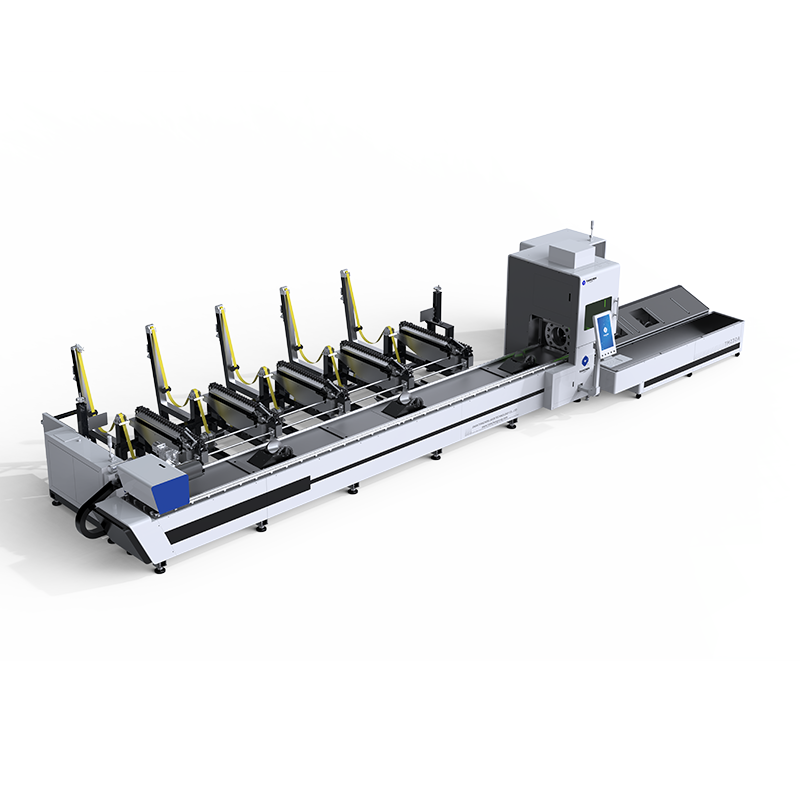
Key Requirements for Laser Cutting Machines in Heavy Machinery Manufacturing
Minimum Thickness Capacity and Structural Material Compatibility
Heavy machinery manufacturing demands laser systems capable of processing structural steel plates exceeding 25 mm—a baseline requirement for load-bearing components like crane booms and excavator frames. Material compatibility must extend beyond carbon steel to include abrasion-resistant alloys and stainless steels used in corrosive or high-wear environments. Modern fiber laser cutting machines maintain ±0.1 mm precision even at 50 mm thickness, preventing costly rework in critical assemblies. Inconsistent kerf widths in high-strength steels can create stress concentration points during operation—directly compromising structural integrity.
Durability, Duty Cycle, and Integration with Large-Format Fabrication Workflows
Industrial-grade laser cutters require ≥90% duty cycles to support continuous 24/7 production, backed by rigid gantry structures that suppress vibration during high-speed cutting. Seamless integration with automated material handling is non-negotiable: pallet changers and robotic arms must synchronize precisely to process standard 6×20 meter plates common in mining equipment fabrication. Cooling systems must dissipate 30 kW+ thermal loads to avoid downtime, while IoT-enabled predictive maintenance reduces unplanned stoppages by 40%, per 2024 industrial automation studies published by the International Association of Automation Engineers. This workflow cohesion ensures just-in-time delivery to downstream welding and machining stations.
High-Power Fiber Laser Cutting Machines for Thick Metal: Performance and Practical Limits
15–30 kW Systems for Steel and Stainless Steel Plates (25–50 mm)
High-power fiber lasers (15–30 kW) enable precise, repeatable cutting of structural steel and stainless steel plates up to 50 mm—essential for heavy machinery frames, hydraulic cylinders, and undercarriage components. While 12 kW systems typically max out at ~40 mm carbon steel, 20–30 kW lasers deliver cleaner, more consistent cuts in 50 mm structural materials. However, efficiency declines sharply beyond 40 mm, especially in stainless steel, due to its higher reflectivity and thermal resistance. As a result, most forward-looking manufacturers prioritize 12–20 kW systems—not as a compromise, but as an optimization: they balance throughput, edge quality, gas consumption, and long-term lens life without sacrificing reliability on thick-section parts.
Trade-offs in Kerf Width, Heat-Affected Zone, and Uptime for Continuous Heavy-Duty Use
Deploying high-power lasers in round-the-clock production requires deliberate trade-off management. Higher wattage narrows kerf width (typically 0.1–0.3 mm), improving dimensional accuracy—but expands the heat-affected zone (HAZ), potentially altering microstructure and hardness near cut edges. Though fiber lasers cut 3–5× faster than plasma alternatives, sustained high-power operation accelerates optical component wear and increases assist gas consumption. For true heavy-duty uptime, operators often de-rate power: using ≤20 kW for stainless steel preserves edge squareness and minimizes nitrogen or oxygen use, while carbon steel tolerates higher wattage for throughput gains—without compromising part integrity or system longevity.
Laser Cutting Machine for Metal: Fiber vs. Alternatives in Heavy Industrial Contexts
In heavy industrial metal fabrication, fiber lasers are the unequivocal standard for structural metal cutting—especially where thickness, reflectivity, and throughput matter. Their 1.06-micrometer wavelength couples efficiently with metallic surfaces, enabling precise absorption across carbon steel, stainless steel, aluminum, and copper alloys—even above 14-gauge. With energy conversion rates approaching 80%, fiber lasers operate at roughly half the cost-per-part of CO₂ systems and deliver cutting speeds up to 4× faster than plasma. CO₂ lasers remain viable only in mixed-material shops, where their broader wavelength spectrum accommodates non-metals like wood or acrylic—but they struggle with reflective metals beyond thin gauges and incur 30–50% higher operational costs due to gas consumption and lower electrical efficiency. For dedicated heavy machinery fabrication, fiber lasers offer superior durability, lower maintenance frequency, and tighter integration with Industry 4.0 workflows.
| Comparison Factor | Fiber Lasers | CO₂ Lasers |
|---|---|---|
| Metal Cutting Efficiency | High (Ideal for thick/reflective metals) | Limited (Effective only for thin gauges) |
| Energy Conversion Rate | ~80% input-to-output | 30–50% lower efficiency |
| Operational Scope | Dedicated metal fabrication | Mixed-material workshops |
FAQs about Laser Cutting Machines in Heavy Machinery Manufacturing
What is the minimum thickness capacity required for laser cutting machines in heavy machinery manufacturing?
For heavy machinery manufacturing, laser systems need to handle structural steel plates exceeding 25 mm in thickness, which is crucial for load-bearing components like crane booms and excavator frames.
What material compatibility is essential for laser cutting machines in this context?
Beyond carbon steel, laser cutting machines must be compatible with abrasion-resistant alloys and stainless steels used in corrosive or high-wear environments.
Why are high-power fiber lasers preferred for thick metal cutting?
High-power fiber lasers (15–30 kW) are preferred for their precise cutting capabilities and repeatability in processing thick structural steel and stainless steel plates up to 50 mm, essential for components like hydraulic cylinders and undercarriage parts.
How do fiber lasers compare to CO₂ lasers in heavy industrial contexts?
Fiber lasers are more efficient for structural metal cutting with better energy conversion rates (~80%), lower cost-per-part, and faster cutting speeds compared to CO₂ lasers, which are more suited for mixed-material shops.
Table of Contents
- Key Requirements for Laser Cutting Machines in Heavy Machinery Manufacturing
- High-Power Fiber Laser Cutting Machines for Thick Metal: Performance and Practical Limits
- Laser Cutting Machine for Metal: Fiber vs. Alternatives in Heavy Industrial Contexts
-
FAQs about Laser Cutting Machines in Heavy Machinery Manufacturing
- What is the minimum thickness capacity required for laser cutting machines in heavy machinery manufacturing?
- What material compatibility is essential for laser cutting machines in this context?
- Why are high-power fiber lasers preferred for thick metal cutting?
- How do fiber lasers compare to CO₂ lasers in heavy industrial contexts?