
 EN
EN
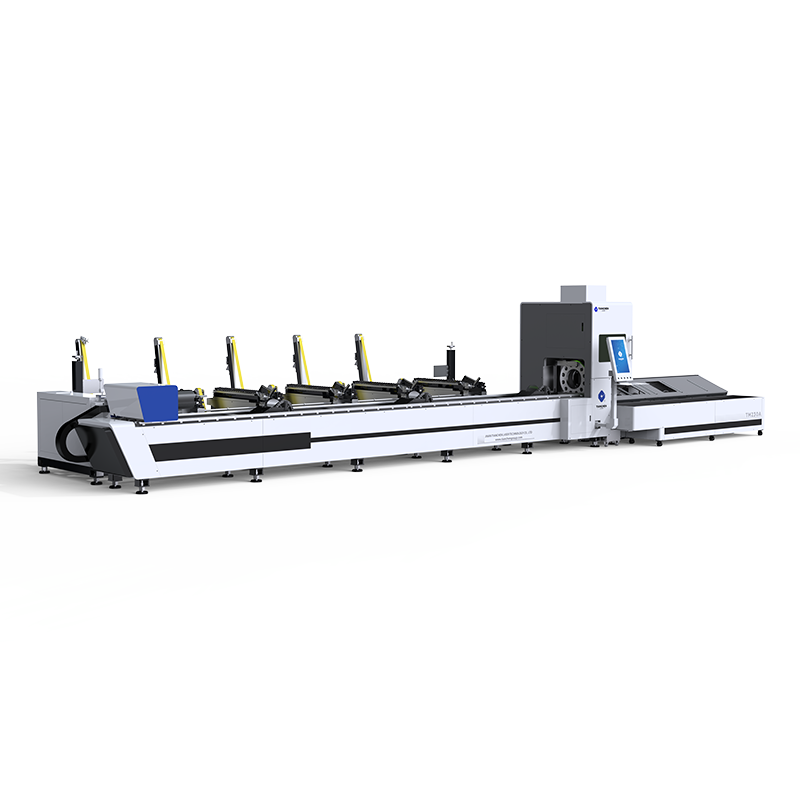
Key Performance Criteria for Automotive-Grade Laser Welding Machines
Precision, Speed, and Thermal Distortion Control in High-Volume Assembly
Automotive production demands micron-level precision and rapid processing to sustain throughput targets exceeding 1,000 units daily. Laser welding machines achieve positional tolerances under ±0.05 mm while operating at speeds surpassing 10 m/min—critical for body-in-white (BiW) assembly, where cycle times directly impact OEM profitability. Unlike arc-based methods, laser systems concentrate energy within a sub-millimeter spot (typically 0.6 mm), minimizing heat input and reducing thermal distortion by up to 70%. This localized heating shrinks the heat-affected zone (HAZ) by 80% versus MIG or TIG processes, eliminating costly post-weld straightening. Advanced pulsed modes further suppress thermal diffusion, preserving metallurgical integrity in fatigue-critical joints such as suspension mounts.
| Performance Factor | Automotive Requirement | Laser Welding Advantage |
|---|---|---|
| Positional Accuracy | ±0.05mm | Galvo scanning systems enable micron-level beam placement |
| Cycle Time | < 45 sec/component | 30–60% faster than MIG welding through continuous wave operation |
| Distortion Allowance | < 0.5mm/m | Localized heat input shrinks HAZ by 80% vs arc processes |
Beam Quality (M²), Power Stability, and Real-Time Monitoring Integration
Beam propagation factor (M²) values below 1.3 define automotive-grade systems, enabling consistent focal spot intensity for defect-free full-penetration welds in 3 mm high-strength steels. Power stability within ±1.5% is essential to prevent undercut and porosity—common failure points in crash-critical components. Modern fiber lasers achieve this via redundant resonator designs and closed-loop chiller systems that regulate temperature fluctuations within ±0.5°C. Integrated process monitoring—including coaxial pyrometry and plasma spectroscopy—detects anomalies in milliseconds, triggering automatic parameter adjustments before defects form. This real-time quality assurance reduces scrap rates to under 0.2% and ensures full traceability for ISO/TS 16949 compliance.
Automotive Application Alignment: Matching Laser Welding Machines to Production Needs
Body-in-White Seam Welding: Fiber vs. Disk Lasers for Rigidity and Aesthetics
For body-in-white (BiW) manufacturing, laser systems must balance structural integrity with surface quality. Fiber lasers dominate high-volume lines due to their 30% faster processing speeds and lower cost-per-weld, making them ideal for internal structural joints requiring maximum rigidity. Disk lasers, with superior beam quality (M² < 1.1), produce near-spatter-free seams on class-A surfaces—particularly advantageous for visible roof and door seams. Their lower peak power also minimizes zinc vaporization in galvanized steel, helping preserve long-term corrosion resistance. While disk lasers command higher capital investment, automakers deploy them selectively where cosmetic performance justifies the premium; fiber lasers remain the workhorse for subframes and underbody assemblies. Both technologies reliably exceed parent-metal tensile strength when parameters are matched to material thickness and joint geometry.
EV Battery Housing and Seat Frame Production: Remote Laser Welding Systems for Flexibility and Throughput
Electric vehicle battery enclosures require hermetic, zero-porosity aluminum welds to mitigate thermal runaway risks, while seat frames demand consistent penetration in high-strength steels like DP980. Remote laser welding (RLW) meets both needs through scanner-based beam delivery—enabling over 150 weld points per minute without part repositioning. Its non-contact nature accommodates complex 3D contours in battery trays and slashes fixture costs by 60% compared to resistance welding. RLW’s programmable focal spots allow instant adaptation between joint types—essential for mixed-model production. A single laser source can serve multiple stations via fiber-optic beam splitting, raising system utilization to 85% while maintaining <0.1 mm positional accuracy across 2 m² work envelopes.
Material-Specific Compatibility of Laser Welding Machines for Automotive Alloys
Aluminum Alloys (5xxx/6xxx) and High-Strength Steels (DP980, TRIP): Parameter Optimization Guidelines
Automotive-grade aluminum alloys (5xxx/6xxx series) pose challenges including high reflectivity and susceptibility to hot cracking. For 6xxx alloys, precise control of peak power and pulse duration prevents magnesium vaporization—reducing porosity by over 30%. High-strength steels like DP980 and TRIP require strict heat input management (<1.5 kJ/cm) to avoid softening in the heat-affected zone. Proven mitigation strategies include:
- Aluminum: Dual-beam wobble techniques to enhance keyhole stability and fusion consistency
- Steels: Optimized shielding gas blends (e.g., Ar–He mixtures) to reduce spatter by up to 40%
Dissimilar Joint Challenges: Mitigating Cracking and Porosity in Aluminum–Steel Laser Welding
Joining aluminum to steel introduces brittle Fe–Al intermetallic phases that compromise ductility and promote cracking. Modern laser systems address this through three integrated approaches:
- Interlayer Solutions: Zinc or nickel interlayers limit intermetallic layer growth to under 10 µm
- Beam Oscillation: Circular or figure-eight patterns improve filler metal mixing and reduce porosity by 35%
- Speed Control: Travel speeds above 8 m/min minimize dwell time and restrict intermetallic formation
Power calibration remains decisive: lasers rated at 3 kW or higher consistently achieve intermetallic thicknesses under 1 mm in lap joints while retaining steel-side tensile strength above 200 MPa.
FAQ
What are the key performance criteria for automotive-grade laser welding machines?
Key performance criteria include precision, speed, thermal distortion control, beam quality, power stability, and real-time monitoring integration.
Why is laser welding preferred in automotive manufacturing?
Laser welding is preferred because it offers high precision, faster cycle times, reduced thermal distortion, enhanced structural integrity, and reliability in producing high-strength welds.
How does laser welding minimize heat-affected zones?
Laser welding concentrates energy into a small spot, reducing overall heat input, which minimizes the heat-affected zone and reduces distortion.
Can laser welding be used for complex automotive components?
Yes, remote laser welding systems accommodate complex 3D contours and allow for non-contact processing, essential for components like EV battery housings and seat frames.