
 EN
EN
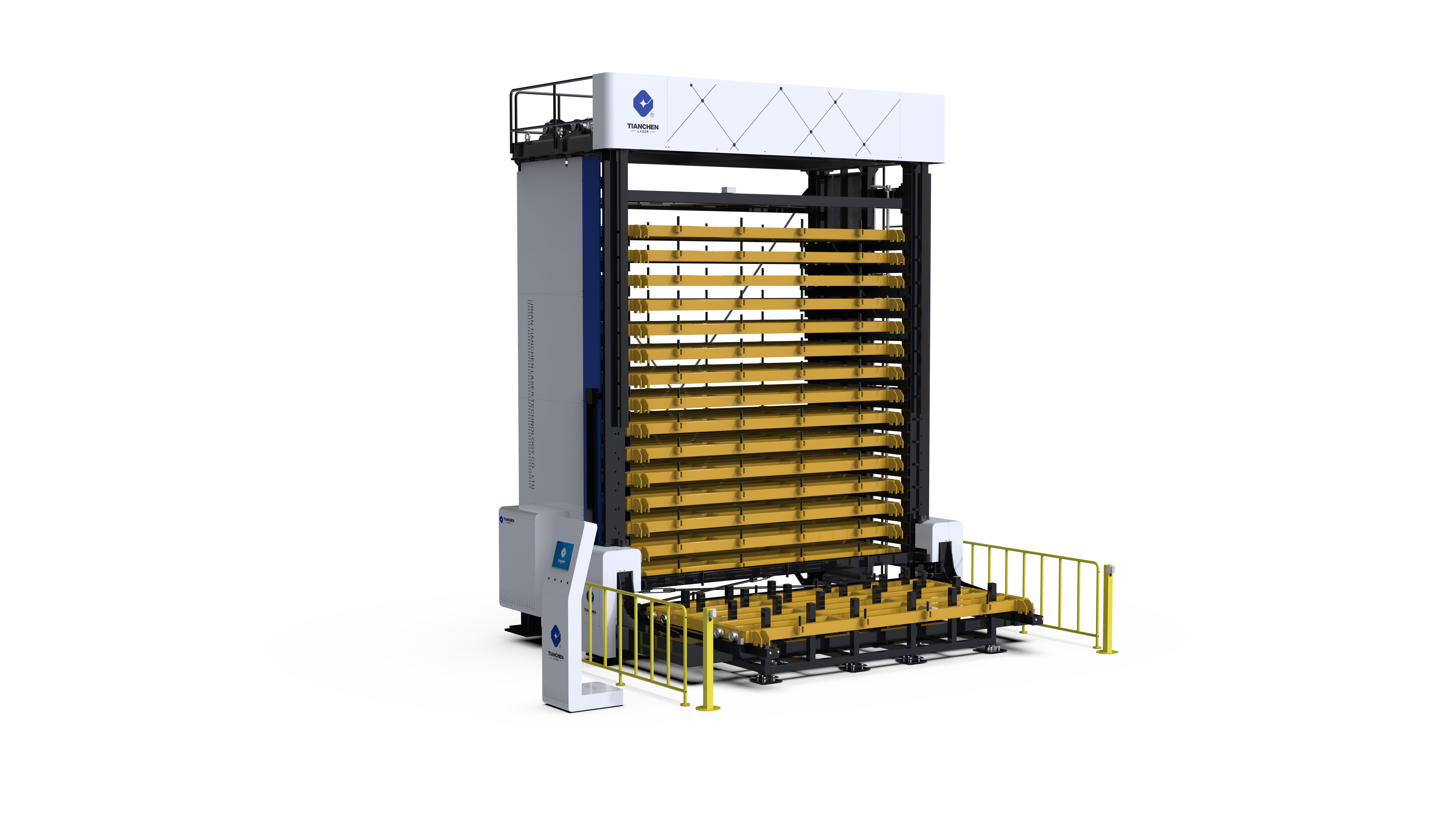
Why Automatic Loading Is Essential for Modern Laser Cutting Machine for Metal Operations
The Manual Handling Bottleneck in High-Mix Sheet and Tube Production
In high-mix environments—where job sizes, material types, and part geometries change frequently—manual loading and unloading creates a critical bottleneck. Operators must lift heavy sheets or tubes (often exceeding 300 lbs), manually align them on the cutting bed, and wait for the laser to complete each cycle before beginning the next. This stop-and-go workflow wastes up to 30% of available cutting time, especially with short-cycle jobs on thin materials. Fatigue and human error compound inconsistency, increasing scrap, rework, and safety incidents. Repetitive lifting also contributes to musculoskeletal injuries and higher operator turnover. For facilities running high-frequency, low-weight jobs, the machine sits idle far more than it cuts—capping throughput, inflating cost per part, and undermining lean production goals.
How Closed-Loop Automation Delivers 20–30% Throughput Gains and Labor Reduction
Closed-loop automation eliminates this bottleneck by integrating sensors, PLC controls, and robotic handling directly into the laser cutting machine for metal operation. These systems monitor real-time cutting progress and pre-position raw material on a secondary table—enabling simultaneous unloading of finished parts and loading of the next sheet, often in under 10 seconds. By removing the operator from the material flow, the system enables true continuous production, delivering 20–30% average throughput gains. One operator can now oversee two to four machines, reducing labor costs proportionally while eliminating hazardous lifting and repetitive motion. Material damage from misalignment or mishandling drops sharply, and cut quality improves through consistent positioning. Feedback-driven scheduling also supports reliable unattended operation during breaks or off-shifts—further amplifying productivity. Over 12 months, these improvements consistently reduce cost per part and deliver rapid ROI, typically within 14–17 months.
Key Components and Configurations of Automatic Loading Systems for Laser Cutting Machine for Metal
Robotic Arms, Conveyors, Load/Unload Stations, and Smart PLC/HMI Integration
An effective automatic loading system for a laser cutting machine for metal integrates four core hardware components:
- Robotic arms, equipped with vacuum suction cups or electromagnetic grippers, handle individual sheets with precision across thicknesses and surface finishes;
- Conveyor systems, often integrated with storage towers or palletized feeders, transport raw material to the cutting zone;
- Dedicated load/unload stations, featuring dual-position tables or rotary indexers, allow parallel material exchange—critical for minimizing cycle interruption;
- Smart PLC and HMI systems, which orchestrate timing, verify sheet dimensions and thickness via integrated sensors, and synchronize seamlessly with the laser controller to prevent collisions or misfeeds.
This integration ensures automated validation of job parameters—eliminating manual setup errors and enabling consistent, repeatable operation without operator intervention.
Single-Machine vs. Multi-Machine Automated Material Handling Cells
The optimal configuration depends on production volume, part mix, and facility layout—not just budget. As shown below:
| Feature | Single-Machine Cell | Multi-Machine Cell |
|---|---|---|
| Typical Setup | One robotic arm or gantry serves one laser cutter | Centralized gantry, overhead crane, or conveyor network serves 2–4 machines |
| Ideal Production | Medium-volume, small-batch, high-variability work | High-volume, high-mix, or just-in-time environments |
| Operator Oversight | Part-time monitoring required | Typically operator-less once commissioned and validated |
| Layout Flexibility | Compact, linear footprint—ideal for retrofitting | Requires buffer zones and sorting logic but maximizes floor-space ROI |
| Payback Period | Faster, often under 18 months | Longer initial investment, but delivers higher long-term ROI through labor consolidation and OEE lift |
A single-machine cell—such as a compact rotary loader with vision-guided alignment—is ideal for shops upgrading legacy equipment or scaling gradually. In contrast, multi-machine cells using synchronized overhead loaders have demonstrated up to 20% gains in overall equipment effectiveness (OEE) by balancing workload across cutting beds and eliminating inter-machine handoffs.
Measuring Real ROI: Cost Savings, Payback, and Strategic Selection for Laser Cutting Machine for Metal
Investing in automatic loading shifts the financial focus from upfront capital cost to measurable, sustained operational improvement. The strongest ROI drivers are not speculative—they’re quantifiable: elimination of operator dependency during load cycles, near-total removal of unplanned idle time, and reduction in material waste. When combined, these yield predictable payback—typically under 18 months—as shown in the table below:
| Cost Reduction Driver | Impact on Annual Operating Costs |
|---|---|
| Operator-less loading | Reduces labor per shift by up to 60% |
| Downtime elimination | Increases machine utilization by 20–30% |
| Scrap reduction | Cuts sheet damage–related waste by 2–5% |
| Energy optimization | Smart PLC logic reduces idle power draw by up to 15% |
Sub-18-Month Payback Driven by Operator-Less Operation and Downtime Elimination
Sub-18-month payback is achievable when automation enables near-continuous operation during scheduled shifts. Industry data from job shops processing mixed sheet sizes confirms full cost recovery in 14–17 months—driven primarily by labor savings and increased machine runtime. For example, a shop running three 8-hour shifts sees immediate compounding gains: fewer operators per shift, higher output per machine hour, and lower cost per part—even before accounting for scrap reduction or energy savings.
Selecting the Right System: Material Compatibility, Automation Readiness, and Verified ROI Metrics
Selection should be grounded in real-world constraints—not vendor claims. Key evaluation criteria include:
- Material compatibility: Does the system reliably handle your thinnest and thickest sheets (e.g., 0.5 mm stainless to 25 mm mild steel), including painted, galvanized, or textured surfaces?
- Automation readiness: Does your laser cutter support industry-standard communication protocols (e.g., OPC UA, EtherNet/IP) for closed-loop feedback with the loader?
- Verified ROI metrics: Prioritize suppliers who provide third-party-validated benchmarks—such as actual throughput increase (%), mean time between failures (MTBF), or maintenance cost per operating hour—over theoretical performance specs.
A robust system will include smart sensors that auto-detect sheet thickness and position, require no manual reconfiguration between jobs, and integrate cleanly with your existing MES or shop-floor scheduling software.
Proven Impact: Case Evidence from Industrial Deployment of Automatic Loading
Real-world deployments confirm automatic loading is no longer aspirational—it’s foundational to competitive metal fabrication. In automotive manufacturing, replacing forklift-based sheet handling with robotic load/unload stations has delivered consistent 20–30% throughput gains. One Tier 1 chassis supplier achieved a 28% increase in machine utilization by eliminating idle time between part changes—without adding floor space or labor. Aerospace fabricators report similarly strong outcomes: automated placement of wing skins and fuselage panels reduced scrap by nearly 15%, while lowering operator fatigue and improving first-pass yield. Across diverse metal shops—from contract manufacturers to OEMs—the shift to closed-loop automation consistently delivers sub-18-month payback, driven by labor reduction, uptime gains, and improved material yield. These results underscore a clear industry shift: automatic loading is no longer optional for laser cutting machine for metal operations—it’s essential for scalability, safety, and sustainable ROI.
FAQs
Why is automatic loading critical for high-mix jobs?
Automatic loading removes bottlenecks caused by frequent material changes, reduces idle time, and improves efficiency in high-mix production environments.
How do robotic arms and conveyors contribute to automation?
Robotic arms and conveyors enable precise material handling and uninterrupted workflow by pre-loading raw materials and unloading finished parts seamlessly.
What is the ROI for automatic loading systems?
Most automatic loading systems provide a return on investment within 14 to 18 months, primarily through reduced labor costs and increased machine utilization.
Can automation handle different materials and thicknesses?
Yes. Advanced systems include sensors and smart PLCs that detect and adjust for material compatibility, ensuring seamless operation across a range of sheet types and thicknesses.
What are the key considerations in selecting an automatic loading system?
Key factors include material compatibility, automation readiness, and validated ROI metrics from suppliers to ensure the system aligns with operational needs.
Table of Contents
- Why Automatic Loading Is Essential for Modern Laser Cutting Machine for Metal Operations
- Key Components and Configurations of Automatic Loading Systems for Laser Cutting Machine for Metal
- Measuring Real ROI: Cost Savings, Payback, and Strategic Selection for Laser Cutting Machine for Metal
- Proven Impact: Case Evidence from Industrial Deployment of Automatic Loading
- FAQs