
 EN
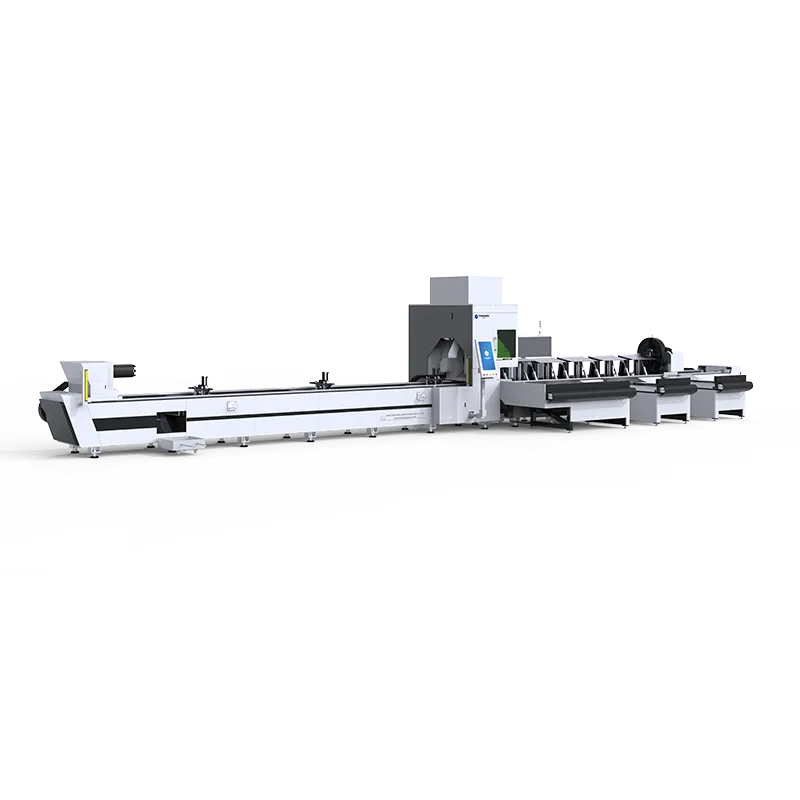
Why Metal Laser Cutting Delivers Unmatched Precision for Auto Sheet Metal
Precision in automotive sheet metal starts with thermal discipline—not raw power.
Thermal Control and Minimal Heat-Affected Zone in Thin-Gauge High-Strength Steels
Thermal control is the defining advantage of metal laser cutting for thin-gauge high-strength automotive steels. A focused fiber laser delivers energy into a small spot, yielding kerf widths as narrow as 0.1 mm and an exceptionally shallow heat-affected zone (HAZ). For materials like DP600 and martensitic grades, this minimal HAZ preserves tensile strength and fatigue life near trimmed edges—critical for crash-sensitive structural components. Unlike plasma or mechanical punching, laser processing avoids large thermal gradients across the sheet, significantly reducing edge microcracking and warpage in parts under 2 mm thick. Nitrogen assist gas cools the cut front while efficiently ejecting molten material, preventing re-solidified dross and enabling cut edges that often require no secondary grinding or stress relief. Controlled laser parameters also maintain stable edge hardness in common high-strength steels—ensuring subsequent forming or welding operations don’t inherit degraded material properties from the blanking stage. This predictability lowers scrap rates during downstream stamping and ensures every trimmed edge serves as a reliable interface for welding or adhesive bonding.
The Power Paradox: Why 2–6 kW Fiber Lasers Optimize Edge Quality (Not Higher Power)
Many fabricators assume higher laser power always improves speed and edge quality—but for thin-gauge high-strength automotive steels, the opposite is often true. At 2–6 kW, fiber lasers sustain a narrow, stable melt pool that produces square edges, low dross, and minimal oxidation. In contrast, 8–10 kW systems risk overheating the cut zone, widening the kerf, increasing edge roughness, and causing burn marks on zinc-coated or aluminized surfaces. Excess energy also broadens the HAZ and can vaporize critical alloying elements—compromising weldability and part integrity. Mid-power lasers with nitrogen assist consistently deliver dross-free edges on 1–2 mm advanced high-strength steels (AHSS) at competitive speeds, preserving the tailored properties of press-hardened grades. Reducing output from 8 kW to 4 kW, for example, frequently cuts dross formation while maintaining throughput—and lowers thermal blooming, keeping beam focus stable over extended production runs. This stability is essential for three-dimensional cuts on formed components. As a result, Tier-1 suppliers standardize on 2–6 kW sources for precision blanking, prioritizing controlled power density over peak wattage.
From 2D Panels to 3D Structural Parts: Advancing Metal Laser Cutting Capabilities
Robot-Guided 3D Metal Laser Cutting with Sub-0.1 mm Path Accuracy
Robot-guided 3D metal laser cutting systems maneuver the cutting head around pre-formed brackets, pillars, and hydroformed rails using five or more axes. Advanced servo control and real-time seam tracking maintain path accuracy within 0.1 mm of the programmed contour—even on curved or springback-affected surfaces. This enables slots, holes, bevels, and trim lines to be produced in a single automated pass on already-stamped or formed parts, eliminating separate drilling, sawing, and milling setups that introduce cumulative alignment errors. For high-strength steel components, localized thermal input reduces springback and distortion compared with mechanical trimming. Five-axis motion also supports precise bevel cuts on tube ends and contoured flanges. With flexible process recipes, the same system can switch between cutting, perforating, and trimming. Calibration routines using touch probes and laser alignment verify path fidelity at every shift start—ensuring consistent, repeatable performance across complex 3D geometries.
Seamless CAD/CAM Integration and Digital Twin Validation in Tier-1 Production
Tier-1 suppliers now integrate 3D CAD models directly into CAM postprocessors for robot-guided metal laser cutting. Their digital twin replicates the full physical work envelope—including fixture clamp positions, robot reach limits, collision zones, and dynamic thermal input during cutting. Engineers validate the entire process virtually before cutting metal, shortening prototype lead times and dramatically reducing scrap caused by unreachable paths or interference. Because the digital twin uses the same kinematic model as the production robot, it accurately predicts access issues that would otherwise halt a live trial. This closed-loop workflow also captures as-built cut data for quality traceability and continuous process refinement. In high-mix automotive programs, digital twin validation enables rapid, error-free changeover between part numbers while sustaining sub-0.1 mm accuracy—accelerating commissioning for new body structures and reinforcing dimensional consistency across part families.
Surface Integrity and Reduced Post-Processing in Automotive Metal Laser Cutting
Achieving Ra < 3.2 µm Edge Roughness in CR2 Steel — Eliminating Deburring in 92% of Cuts
Metal laser cutting routinely achieves edge roughness below Ra 3.2 µm on CR2 cold-rolled steel—a surface finish suitable for direct assembly or welding without secondary finishing. Precise synchronization of laser power, feed speed, and nitrogen assist pressure minimizes dross, recast layers, and thermal damage, delivering a predictable, clean edge. This eliminates deburring in 92% of cuts, reducing labor, cycle time, and consumable use. Crucially, the small HAZ maintains dimensional stability in thin-gauge high-strength steels, limiting edge hardening and distortion—so parts remain ready for spot welding, adhesive bonding, or further forming without extra cleaning or correction. On high-volume lines, this consistency lowers rework, inspection burden, and downtime, enabling seamless flow from laser cutting to downstream operations while meeting stringent automotive tolerances.
Material-Specific Optimization for High-Strength Automotive Steels
Process Parameter Mapping for DP980, TRIP800, and 22MnB5 Press-Hardened Boron Steel
Optimizing metal laser cutting requires grade-specific parameter mapping—not universal settings. Dual-phase DP980 performs best with moderate power and higher feed rates to limit heat input and prevent edge softening. TRIP800 benefits from reduced oxygen assist pressure to minimize edge oxidation and preserve ductility. For 22MnB5 press-hardened boron steel, cutting must occur in the soft blank stage before hot stamping; attempting to cut the fully hardened part invites brittle fracture and inconsistent edge quality. Tuning laser power, speed, focal position, and nitrogen flow for each alloy ensures mechanical property retention, dimensional accuracy, and robust downstream weldability—turning material complexity into a controlled, repeatable manufacturing advantage.
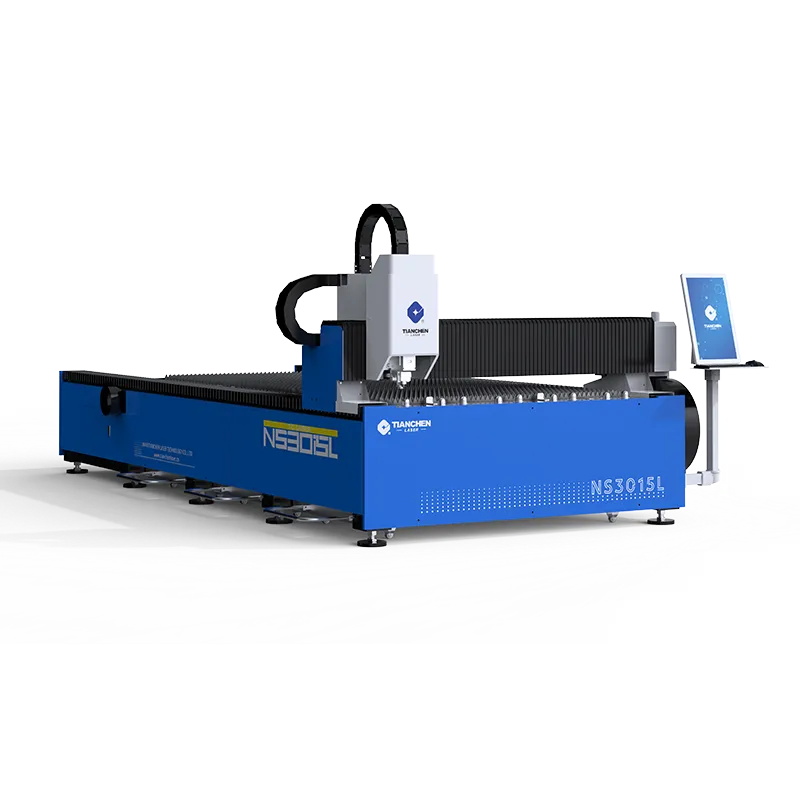
FAQ Section
Why is thermal control important in automotive metal laser cutting?
Thermal control minimizes the heat-affected zone (HAZ), reducing edge damage and preserving material properties, which are critical for structural integrity and downstream processes like welding.
What is the ideal laser power range for automotive sheet metal?
For thin-gauge high-strength steels, the ideal power range is 2–6 kW, which ensures precision and prevents overheating, maintaining edge quality and material properties.
How does robot-guided 3D laser cutting benefit automotive manufacturing?
It allows for precise, automated cutting of complex 3D shapes, reducing errors and eliminating the need for separate machining processes like drilling or sawing.
What materials benefit most from laser cutting optimization?
Materials like DP980, TRIP800, and 22MnB5 require specific parameter adjustment for optimal cutting, ensuring consistency and preserving material integrity.
How does laser cutting reduce post-processing needs?
By achieving edge roughness below Ra 3.2 µm and minimizing defects, laser cutting eliminates the need for extensive deburring or finishing in most cases.
Table of Contents
- Why Metal Laser Cutting Delivers Unmatched Precision for Auto Sheet Metal
- From 2D Panels to 3D Structural Parts: Advancing Metal Laser Cutting Capabilities
- Surface Integrity and Reduced Post-Processing in Automotive Metal Laser Cutting
- Material-Specific Optimization for High-Strength Automotive Steels
-
FAQ Section
- Why is thermal control important in automotive metal laser cutting?
- What is the ideal laser power range for automotive sheet metal?
- How does robot-guided 3D laser cutting benefit automotive manufacturing?
- What materials benefit most from laser cutting optimization?
- How does laser cutting reduce post-processing needs?