
 EN
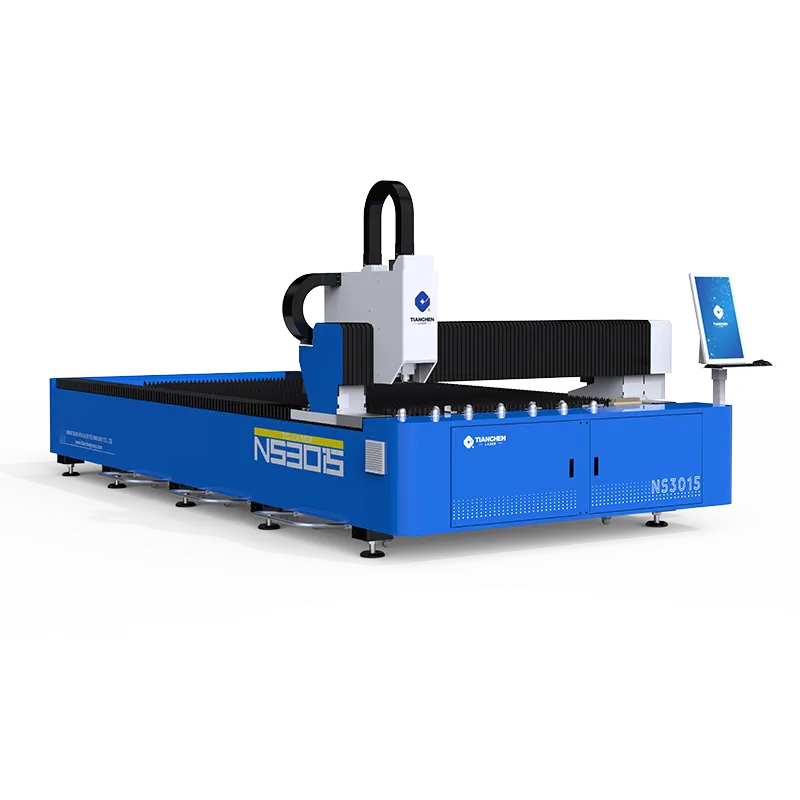
Material Compatibility: Matching the Industrial Laser Cutting Machine to Construction Metals
Selecting the right laser source and assist gas starts with the metals in your production mix. Construction fabricators commonly cut Corten, stainless steel, and aluminium in thicknesses from 0.5 mm to 40 mm—but each metal responds differently to the same beam.
Cutting Corten, Stainless Steel, and Aluminium: Thickness Ranges (0.5–40 mm) and Quality Trade-offs
Corten and other weathering steels cut cleanly with oxygen assist gas, producing a corrosion-resistant oxide edge. Stainless steel requires nitrogen to achieve bright, oxidation-free edges—though nitrogen consumption rises sharply above 12 mm. Aluminium’s high thermal conductivity demands high power density and often yields more dross on thick sections.
| Material | Typical thickness window (mm) | Edge quality and cut characteristics | Key trade-off |
|---|---|---|---|
| Corten / weathering steel | 0.5–40 | Clean, square edge with oxygen; slight oxide layer | Slower speed at >25 mm; oxide edge may need removal before painting |
| Stainless steel | 0.5–30 | Bright, oxide-free edge with nitrogen; minimal dross | Higher gas cost and power demand at >12 mm |
| Aluminium | 0.5–40 | Good edge on thin sheet; rough or burred edge on >20 mm | High reflectivity requires back-reflection protection; faster oxidation |
Fiber lasers from 6 kW to 12 kW handle most construction plate up to 25 mm efficiently. 20 kW systems extend capability to 40 mm but add capital and maintenance costs. Quality trade-offs grow when shops mix thin and thick parts—settings for 1 mm aluminium differ significantly from those for 30 mm Corten.
Why High-Reflectivity Metals (Copper, Brass) Still Challenge Even Advanced Fiber-Based Industrial Laser Cutting Machines
Although modern machines include back-reflection sensors and beam dump features, copper and brass remain difficult. Copper reflects over 90% of 1 µm laser light at room temperature, so even minor misalignment can send energy backward into the cutting head, risking optical damage, inconsistent cuts, and safety interlock triggers. Brass is only slightly less reflective. Advanced fiber systems use dynamic focus, high peak power, and specialized nozzles to improve absorption—but thick copper (>6 mm) often still requires green or CO₂ wavelengths for stable cutting. For construction machinery manufacturers, this means copper and brass parts must be prototyped and qualified separately rather than assumed equivalent to steel or aluminium.
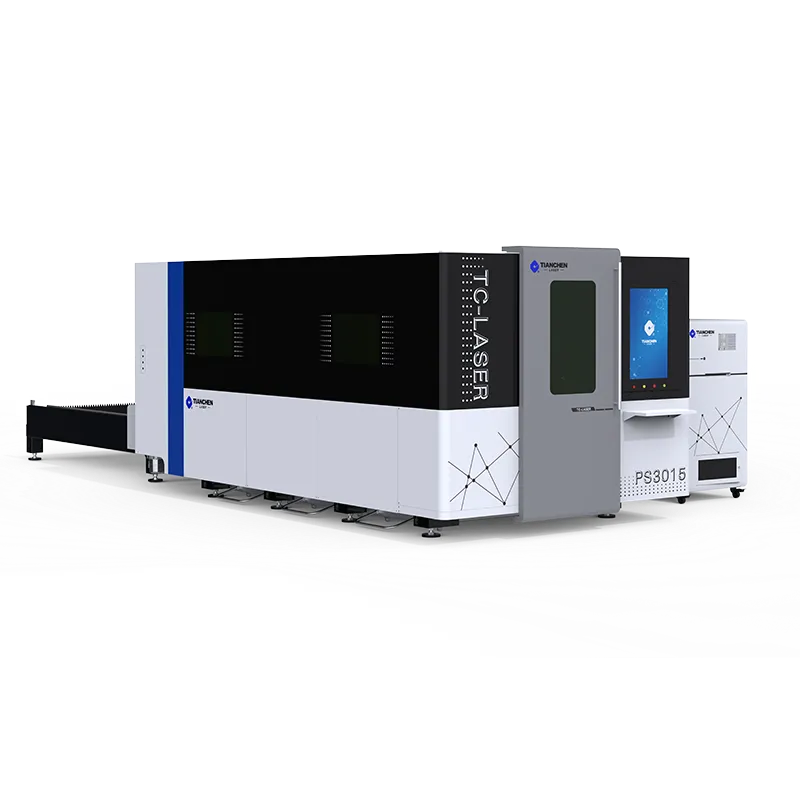
Laser Source Comparison: Fiber vs CO₂ for Heavy-Duty Construction Machinery Fabrication
Precision Metrics: Beam Mode, Wavelength, and Kerf Consistency in Structural Plate Cutting
Choosing between fiber and CO₂ for heavy-duty fabrication hinges on three precision metrics: beam mode, wavelength, and kerf consistency. A single-mode fiber laser delivers tighter focus than multi-mode CO₂ beams, enabling finer detail and better edge squareness. At 1,064 nm, fiber lasers couple efficiently into steel, stainless steel, and aluminium—whereas CO₂ lasers (10,600 nm) reflect more energy from polished surfaces but perform well on oxidised mild steel. Kerf consistency—the width of the cut slot—is tighter and more uniform with fiber: typically 0.1–0.3 mm on 5 mm stainless plate, versus a wider, less predictable kerf with CO₂ due to its larger focused spot.
In 2026 cutting-speed comparisons, a 6 kW fiber laser cut 5 mm stainless at 236 in/min versus 106 in/min for a comparable CO₂ system—and 15 mm stainless at 35 in/min versus 29 in/min. For structural plate up to 25 mm, fiber’s narrower kerf and stable beam mode reduce dross and improve edge squareness. While CO₂ can deliver smoother surfaces on very thick mild steel (>25 mm), its wider kerf, slower speeds, and higher gas consumption lower overall precision value in construction machinery fabrication. Most heavy-duty shops now select fiber as the primary source for high-mix structural cutting.
Automation & Industry 4.0 Integration: Smart Control for High-Mix, High-Volume Production
CNC Nesting, Real-Time Process Monitoring, and Predictive Maintenance in Modern Industrial Laser Cutting Machines
In high-mix construction machinery fabrication, the operational value of an industrial laser cutting machine depends increasingly on smart control—not just raw cutting speed. CNC nesting automatically arranges part geometries across standard plate sizes to minimize scrap and shorten setup time, especially critical when shifting between thick structural steel blanks and thinner aluminium panels within the same shift. Real-time process monitoring tracks kerf width, assist-gas pressure, and nozzle condition, allowing operators to correct drift before edge quality falls outside tolerance. Predictive maintenance leverages that sensor data—cutting-head hours, lens temperature, drive-axis loads—to schedule service before unscheduled stops disrupt output.
Together, these Industry 4.0 functions create a closed-loop production cell: quality data feeds back into nesting strategies, maintenance intervals, and job sequencing. Operators gain remote visibility into machine health and job status, reducing response time when a nozzle wears or plate positioning shifts. For equipment buyers, this smart-control layer is now a key differentiator when matching a machine to mixed part families and fluctuating demand—not just single-part mass production. The result is more consistent throughput across steel grades, fewer manual inspections, and lower downtime risk in heavy fabrication environments.
Total Cost of Ownership: Balancing Speed, Accuracy, Safety, and Lifecycle Value
Selecting an industrial laser cutting machine for construction machinery manufacturing requires a Total Cost of Ownership (TCO) view—not just the quoted price. A practical lifecycle formula includes acquisition cost, maintenance, energy, assist gas, consumables, downtime, scrap, safety-related expenditures, and residual value.
Speed and accuracy often compete. Higher cutting speed raises throughput but can increase assist gas use, nozzle wear, and scrap if edge quality drops. Conversely, precision cutting of structural plate reduces rework and downstream grinding hours—costs that frequently outweigh a slower cut rate. Use annualized TCO to compare a faster machine with higher operating cost against a slower one with lower scrap and superior edge quality.
Safety is a direct lifecycle cost driver—not an overhead afterthought. Enclosed cutting areas, fume extraction, and robust interlocks lower exposure risk, reduce stoppages, and may decrease insurance or compliance expenses. In construction machinery fabrication, poor safety controls can halt a production line for hours.
A comprehensive TCO assessment should cover:
- Acquisition: laser source power, cutting head, automation interfaces, installation
- Operating: electricity, assist gas, nozzles, lenses, and routine labor
- Maintenance: scheduled service, spare parts, and unplanned repair risk
- Downtime and scrap: rework time, lost production, and material waste
- Residual value: end-of-life resale or salvage based on machine condition and market demand
Procurement teams should request vendor TCO scenarios at different utilization levels, because energy and gas costs over a decade can exceed the initial purchase price. The optimal choice balances speed, accuracy, safety, and lifecycle value under the factory’s real production mix—not just a single specification sheet.
FAQ
What is the typical thickness range for cutting construction metals?
Construction metals like Corten, stainless steel, and aluminium are commonly cut in thicknesses from 0.5 mm to 40 mm.
Why are high-reflectivity metals challenging for industrial laser cutting?
Metals like copper and brass reflect a significant portion of laser light, making energy absorption difficult and potentially causing optical damage and inconsistent cuts.
How does CNC nesting improve production efficiency?
CNC nesting automatically arranges part geometries on plate sizes to minimize scrap, reduce setup time, and increase productivity.
What factors are included in a Total Cost of Ownership (TCO) calculation?
TCO includes acquisition costs, operating expenses (energy, assist gas, consumables), maintenance, downtime, scrap, and residual value at the end of the machine's lifecycle.
Which laser source is more suitable for heavy-duty construction fabrication, fiber or CO₂?
Fiber lasers are more commonly selected for structural plate cutting due to their higher precision, faster cutting speeds, and ability to handle mixed metal constructions efficiently.
Table of Contents
- Material Compatibility: Matching the Industrial Laser Cutting Machine to Construction Metals
- Laser Source Comparison: Fiber vs CO₂ for Heavy-Duty Construction Machinery Fabrication
- Automation & Industry 4.0 Integration: Smart Control for High-Mix, High-Volume Production
- Total Cost of Ownership: Balancing Speed, Accuracy, Safety, and Lifecycle Value
-
FAQ
- What is the typical thickness range for cutting construction metals?
- Why are high-reflectivity metals challenging for industrial laser cutting?
- How does CNC nesting improve production efficiency?
- What factors are included in a Total Cost of Ownership (TCO) calculation?
- Which laser source is more suitable for heavy-duty construction fabrication, fiber or CO₂?