
 EN
EN
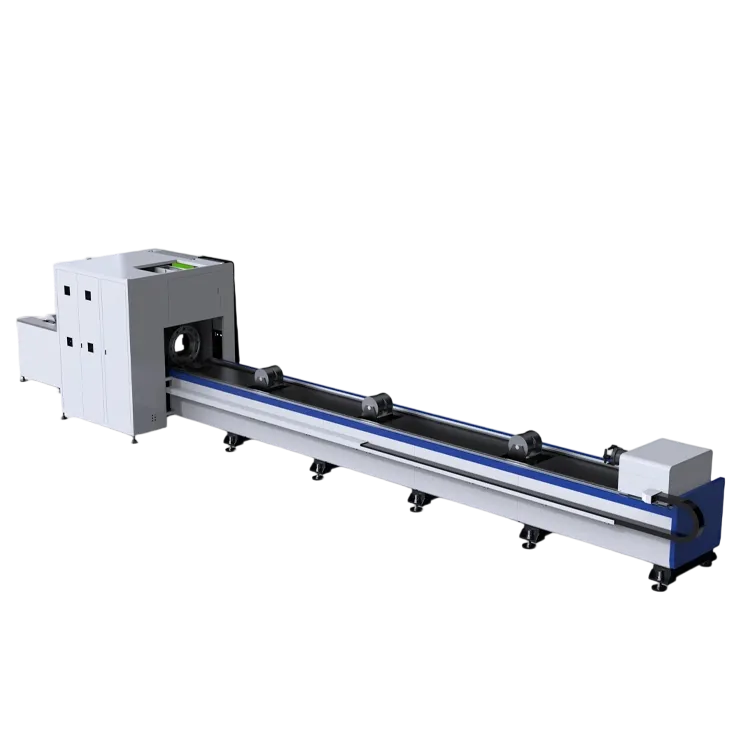
The Real Labor Equation in Metal Fabrication
Metal fabrication shops track labor costs by the hour, but the real expense hides where timesheets never look. When a shop invests in laser cutting, headcount reduction is only the most visible benefit. Deeper savings come from eliminating rework, reducing material waste, and compressing timelines that manual or plasma processes stretch across multiple shifts.
Beyond the Hourly Wage — Hidden Labor Costs
A plasma operator at $25 per hour is a straightforward line item. What rarely appears is the downstream labor: rough edge grinding, hole reaming, slag removal, and fit-up adjustments for weld prep. These secondary steps can consume two to three times the original cut labor. Laser cutting produces edges requiring zero secondary finishing, removing entire labor categories without eliminating a single position.
Material handling compounds the problem. Plasma and waterjet parts move between cutting, deburring, and inspection stations. Each transfer consumes unmeasured minutes. A laser cutting system with automated loading consolidates these movements into one handling event, reducing cumulative touch time by 40 to 60 percent.
Where Manual Cutting Creates Bottlenecks
Three predictable bottlenecks emerge. First, nesting — a programmer spends 20 to 45 minutes optimizing sheet layouts that automated nesting software completes in seconds. Second, quality inspection — hand-cut parts require dimensional verification at higher rates than laser-cut parts with inherently repeatable precision. Third, iterative trial cuts — manual processes may need two or three test cuts before production parameters are confirmed.
How Laser Cutting Automation Reshapes Production Economics
Single-Operator Multi-Machine Workflows
A fiber laser cutting system with autoloading allows one operator to manage two or three machines simultaneously. During the cutting cycle — 8 to 15 minutes per sheet — the operator unloads, sorts, and checks parts from the previous cycle. This overlapping workflow consolidates three separate labor allocations into one position. For a mid-volume shop on two shifts, annual savings from consolidating six operators to two can exceed $200,000 in direct wages, before benefits and turnover costs.
Tianchen Laser has observed this across its global customer base — shops adopting fiber laser cutting with automated handling consistently report operator consolidation ratios between 2:1 and 3:1.
Eliminating Secondary Finishing Steps
The labor multiplier of secondary operations is the most overlooked cost driver. Plasma-cut mild steel requires edge grinding adding 3 to 7 minutes per part. Fiber laser cutting produces a narrow kerf with an oxide-free edge on nitrogen-assisted cuts, eliminating grinding for most applications. On stainless steel, where plasma is impractical due to oxidation, laser cutting replaces multi-step processes that previously required sawing, milling, or waterjet cutting.
A Practical Case: From Overtime Crisis to Single-Shift Output
A structural steel fabricator in Ohio producing bracketry for agricultural equipment manufacturers found customer orders growing 35 percent year-over-year while three plasma stations — each with a dedicated operator — could not keep pace. Weekend overtime added 40 percent premium labor costs to already marginal jobs.
Analysis revealed the plasma-to-finishing handoff as the bottleneck. Each bracket required 4.2 minutes of grinding and edge smoothing before welding. At 1,200 brackets weekly, this consumed over 80 hours of labor that added no dimensional value.
The fabricator installed a fiber laser cutting system with automated loading. Within one quarter, grinding labor dropped to under 0.5 minutes per bracket. Three plasma stations consolidated into one laser cell running two shifts with one operator each. Overtime was eliminated. Equipment cost was recovered in just over 14 months through labor savings and throughput gains. ISO 9013 edge quality classifications helped quantify the improvement to customers as objective evidence of process upgrade.
Evaluating a Laser Cutting Investment
Key Performance Metrics
Look beyond quoted cutting speed at three metrics. First, assist gas consumption at typical production thickness — nitrogen and oxygen costs can exceed the machine payment for stainless or thick mild steel. Second, pierce time for the most common material thickness, as pierce cycles consume more time than straight-line cutting on parts with many internal features. Third, acceleration and positioning speed between cuts, which governs throughput on nested sheets with many small parts.
Integration and Training Considerations
Operator training requires one to two weeks for basic proficiency — far less than skilled plasma or manual cutting. The CNC interface should import from common CAD formats without intermediate conversions that introduce errors. OSHA 1910.212 covers machine guarding requirements. Preventive maintenance — lens cleaning and beam alignment — should be scheduled weekly to maintain edge quality consistency.
Frequently Asked Questions
How much labor can laser cutting reduce compared to plasma?
A fiber laser cutting system typically cuts direct cutting labor by 50 to 67 percent through multi-machine workflows, and eliminates 70 to 90 percent of secondary finishing labor. Combined savings often recover the investment within 12 to 18 months.
What materials can fiber laser cutting process effectively?
Fiber laser cutting handles mild steel, stainless steel, aluminum, brass, and copper. Reflective metals require back-reflection protection, standard in modern systems from manufacturers like Tianchen Laser. Thickness capacity ranges from foil-gauge to over one inch.
Why does laser cutting produce cleaner edges than plasma?
Laser cutting uses a kerf width of 0.1 to 0.3 millimeters versus plasma’s 1.5 to 5 millimeters. The narrower energy input produces less heat-affected material and minimal dross, frequently meeting print tolerances without secondary finishing.
Can a single operator run multiple laser cutting machines?
With automated loading and unloading, one operator manages two to three machines. Natural cutting cycle windows allow part sorting and inspection. This eliminates the one-operator-per-machine constraint of manual and plasma stations.
What is the typical payback period for a laser cutting investment?
Most shops recover the investment within 12 to 24 months through labor savings, reduced waste, and throughput increases. Shops with high finishing labor and significant overtime see faster payback. Cost modeling should include gas, power, and maintenance.
Do laser cutting systems require specialized facility preparation?
Fiber laser systems require three-phase power, compressed air, and adequate ventilation or fume extraction. Floor loading applies for larger machines. Most installations fit within existing fabrication shop infrastructure.