
 EN
EN
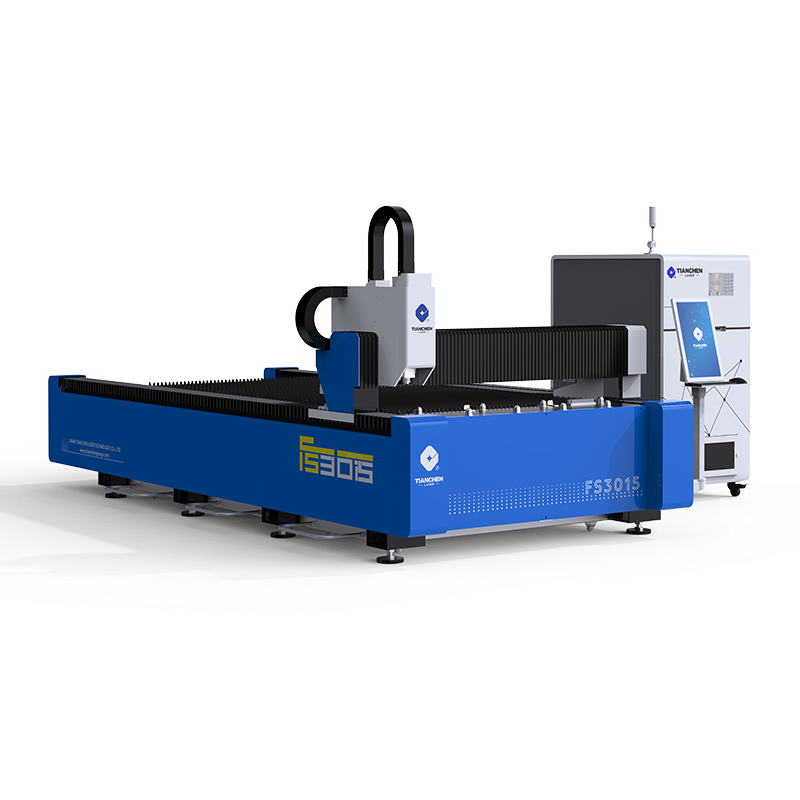
One Technology, Multiple Industries
Laser cutting has achieved broad industrial adoption not because it excels in any single application but because its fundamental advantages — non-contact processing, narrow kerf width, minimal heat-affected zone, and CNC precision — transfer across industries with only parameter adjustments rather than machine reconfiguration. The same 6kW fiber laser that cuts 10mm steel brackets for agricultural machinery in the morning cuts 3mm stainless enclosures for medical equipment in the afternoon — a flexibility that no mechanical cutting process matches.
The technology's adaptability stems from three controllable variables: laser power (1–20kW+), assist gas type and pressure (oxygen for carbon steel, nitrogen for stainless and aluminum, compressed air for thin-gauge non-critical parts), and focal position relative to the material surface. Changing these three parameters adapts the process from cutting 0.5mm aluminum foil (200W, nitrogen, surface focus) to cutting 40mm carbon steel plate (15kW, oxygen, below-surface focus for kerf widening) — a thickness range spanning nearly two orders of magnitude on one machine platform.
A diversified job shop in Brazil serving agriculture, construction, automotive, and general fabrication adopted a customized Tianchen Laser system because no single industry represented more than 30% of revenue. The machine's ability to switch between 1mm stainless enclosures, 15mm brackets, and 25mm wear plates without tooling changes enabled serving all four customer bases from one cutting resource.
Industry-Specific Adaptation
Heavy Machinery and Mining
Heavy machinery cuts thick, hard materials — wear-resistant steels like Hardox 450 and 500, high-strength structural grades S690 and S960. Laser cutting challenge: maintaining edge quality on materials designed to resist deformation.
Wear-resistant steels contain alloying elements — chromium, molybdenum, boron — forming hard carbides requiring higher power density than mild steel. A 12kW laser achieves clean cuts through 20mm Hardox 500 where 6kW begins losing edge squareness. Assist gas flow must be 15–25% higher for abrasion-resistant grades.
The material cost of wear-resistant plate — 1,500–2,500 per ton versus 600–800 for mild steel — makes the nesting optimization that laser cutting's CNC control enables particularly valuable. Improving material utilization from 65% (manual plasma nesting) to 80% (automated laser nesting) on a fabricator consuming 500 tons annually of wear plate saves approximately 94,000–156,000 in annual material cost.
Automotive and Transportation
Automotive manufacturing cuts thin materials — 0.6–2mm for body panels, brackets, and reinforcements — at high volumes. Fiber laser speed on 1mm steel at 12–15 m/min processes a 1,500×3,000mm sheet in approximately 3–5 minutes depending on part complexity and nest density.
Laser cutting advantages are most pronounced in prototype, low-volume, and replacement parts production where stamping die costs (20,000–100,000+) and lead times (8–16 weeks) cannot be justified. Laser produces the same parts with zero tooling and same-day turnaround from CAD file.
Shipbuilding and Marine
Shipbuilding processes thick plate — 6–50mm — in large formats up to 3,000×12,000mm. Hull plates, stiffeners, and internal structures require accuracy that flame cutting cannot achieve at production speeds. Fiber laser at 12–20kW provides thick-plate power with precision for complex curved profiles while maintaining cutting speed acceptable for shipyard throughput requirements.
The narrow kerf — 0.15–0.5mm — reduces the gap between adjacent parts, improving material utilization by 5–8% versus plasma cutting. On the thousands of tons of steel a shipyard processes annually, this represents significant material cost recovery that contributes directly to operating margin.
Frequently Asked Questions
Can one laser cutting machine process all metal types?
Fiber laser machines process carbon steel, stainless steel, aluminum, copper, brass, titanium, and nickel alloys with parameter adjustments. Reflective metals (aluminum, copper, brass) require back-reflection protection in the laser source. Different material families require different assist gas and parameter libraries stored in the CNC controller.
How does material thickness capability scale with laser power?
1kW: 0.5–6mm carbon steel. 3kW: 1–12mm. 6kW: 1–20mm. 12kW: 1–30mm. 20kW+: 1–50mm. The exponential speed drop above approximately 60% of maximum thickness means most production cutting occurs in the 20–60% of maximum capability range where speed and edge quality balance optimally.
What is the breakeven point for fiber laser versus plasma cutting?
Fabricators processing 1,500+ hours annually on material predominantly under 20mm typically achieve laser payback within 12–18 months through eliminated edge grinding labor and improved material utilization. The breakeven extends to 24–30 months when thick plate (25mm+) represents more than 40% of production because plasma retains a speed advantage on very thick sections.
How does the frog-leap feature improve cutting efficiency?
Frog-leap technology adjusts the cutting head's vertical lift height during rapid traverses between parts, reducing the non-cutting travel time. Standard systems raise the head to a fixed safe height; frog-leap calculates the minimum clearance needed for each traverse based on the part geometry map, reducing traverse time by 20–30%. Tianchen Laser integrates frog-leap into the bus control system.
What automation options exist for high-mix production environments?
Automatic nozzle changers switch between different nozzle sizes for different material-thickness combinations without operator intervention. Automatic focal position adjustment compensates for material flatness variations. Automatic sheet thickness measurement confirms the loaded sheet matches the nesting program. These automation features reduce setup time between different jobs.
How does the bus control system improve cutting performance?
The bus system architecture replaces point-to-point wiring with networked communication between controller, servo drives, and I/O modules. This reduces signal latency, enables faster CNC communication response, and simplifies troubleshooting through centralized diagnostics. Tianchen Laser's PM series machines incorporate bus control for enhanced performance in high-productivity environments.