
 EN
EN
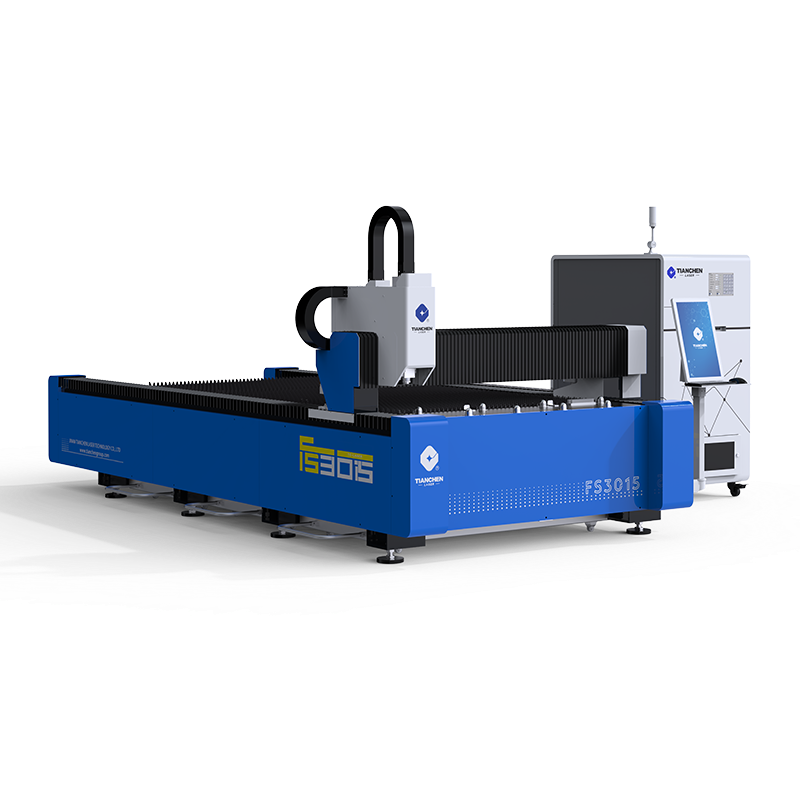
Steel Construction's Transformation Through Laser Technology
Steel construction — industrial buildings, high-rise structures, bridges, offshore platforms — processes thousands of tons of steel plate annually through cutting, drilling, and edge preparation operations. Laser cutting has replaced flame cutting and plasma as the primary processing method for medium-thickness structural steel because of three factors: the elimination of secondary operations, the precision that enables fit-up without adjustment, and the speed that keeps pace with the accelerated construction schedules that modern projects demand.
Flame cutting produces a heat-affected zone extending 3–5mm from the cut edge with edge hardening that complicates subsequent welding. Plasma cutting produces a bevel angle of 1–3 degrees and dross accumulation requiring grinding before weld joint preparation. Fiber laser cutting produces square edges with a heat-affected zone of 0.1–0.3mm on material up to 25mm thickness — edges that are weld-ready without grinding, straightening, or oxide removal.
A steel structure fabricator in Brazil producing frames for commercial buildings adopted a customized high-power fiber laser cutting solution from Tianchen Laser to replace two plasma cutting tables that had become the production bottleneck. The plasma system's 15–20 minutes of edge grinding per sheet consumed two operators full-time on secondary processing. The fiber laser's weld-ready edges eliminated that labor entirely, allowing the two operators to be reassigned to assembly stations where their skills increased total shop throughput rather than correcting cutting process deficiencies.
Construction-Specific Cutting Requirements
Large-Format Plate Processing
Construction steel uses plate dimensions larger than standard industrial sheet sizes. Beam and column web plates, base plates, stiffener plates, and connection gussets often require processing on sheets of 2,500×12,000mm or larger. Standard-format laser cutting machines at 1,500×3,000mm or 2,000×4,000mm require either sheet splitting before cutting or repositioning mid-sheet — both adding labor and reducing precision.
Large-format laser cutting systems address this requirement with worktables of 2,500×6,000mm up to 2,500×12,000mm, allowing full-sheet processing without repositioning. The large format adds approximately 30–50% to machine cost but eliminates the sheet-splitting operation that a standard-format machine requires — a trade-off that favors large format when more than 40% of production uses plate dimensions exceeding the standard table size.
The exchange table system — where one table unloads finished parts and reloads raw plate while the cutting head processes the other table — maintains production continuity. Table exchange time of 30–60 seconds minimizes the non-cutting time that accumulates in construction steel cutting where individual sheets may require 20–45 minutes of cutting time.
Thick-Plate Cutting Parameters
Construction steel plate thickness ranges from 6mm for secondary members to 80mm+ for column base plates and heavy connection plates. Fiber laser cutting with oxygen assist on carbon steel achieves clean cuts through 25–30mm at 12kW and through 40–50mm at 20kW+. The cutting speed on thick plate drops exponentially with thickness — 25mm plate cuts at approximately 0.8–1.0 m/min at 12kW, while 40mm plate cuts at 0.3–0.4 m/min.
The practical limit for fiber laser cutting in construction applications is approximately 40–50mm thickness. Beyond this, plasma retains an economic advantage because the capital cost of 20kW+ laser systems, combined with the slow cutting speed on 50mm+ material, produces longer payback periods than the 12–24 months typical for the sub-40mm range. Fabricators with significant work above 50mm often operate a laser for the sub-40mm range and a plasma for thicker material — each technology optimized for its economic thickness window.
Accuracy and Fit-Up Improvements
The ±0.1–0.3mm positioning accuracy of fiber laser cutting produces parts that fit together at assembly without the edge grinding, shimming, and repositioning that less precise cutting methods require. Construction tolerances for steel frame assembly typically allow ±2mm at bolted connections and ±3mm at welded connections. Laser-cut parts consistently achieve dimensions within ±0.5mm of nominal — well within assembly tolerance and eliminating the cumulative errors that require hole reaming and slot elongation in the field.
Frequently Asked Questions
What laser power is needed for construction steel cutting?
8–12kW covers 80% of construction steel cutting at 6–25mm thickness. 15–20kW extends economical cutting to 40mm+. For fabricators with significant work above 50mm, a laser for sub-40mm and plasma for thicker sections provides the best economics. Tianchen Laser offers systems from 3kW to 20kW+ for construction applications.
How does fiber laser compare to plasma for construction steel?
Laser produces square, dross-free edges requiring no grinding — saving 15–25 minutes of secondary processing per sheet on thick plate. Plasma costs less initially but incurs ongoing labor and consumable costs that typically exceed the laser's higher capital cost within 18–30 months for fabricators processing 2,000+ hours annually.
What plate sizes can construction-grade laser cutting machines handle?
Standard systems: 1,500×3,000mm and 2,000×4,000mm. Large-format systems: 2,500×6,000mm to 2,500×12,000mm for full-sheet processing of structural plate. Tianchen Laser's FB12525 handles large-format applications combining power and precision.
How does laser cutting affect downstream welding quality?
Laser-cut edges are oxide-free when cut with nitrogen assist (stainless) or have thin mill-scale-like oxide with oxygen assist (carbon steel). Both are weld-ready without grinding. The narrow heat-affected zone (0.1–0.3mm) preserves base metal properties at the weld joint, improving weld quality compared to flame-cut edges with deeper HAZ.
What is the typical payback period for a construction steel laser cutting machine?
12–24 months for systems operating 2,000+ hours annually, based on labor savings from eliminated edge grinding, material savings from improved nesting (5–10% utilization gain), and throughput improvement from faster cutting and reduced secondary processing. Tianchen Laser provides ROI analysis as part of pre-sale consultation.
Can construction laser cutting machines operate unattended?
Yes, with automatic sheet loading/unloading and storage systems. Tianchen Laser's automatic storage system enables continuous lights-out production — the system loads the next sheet, exchanges tables, and continues cutting without operator intervention. Unattended operation extends productive hours from single-shift to 18–24 hours daily.