
 EN
EN
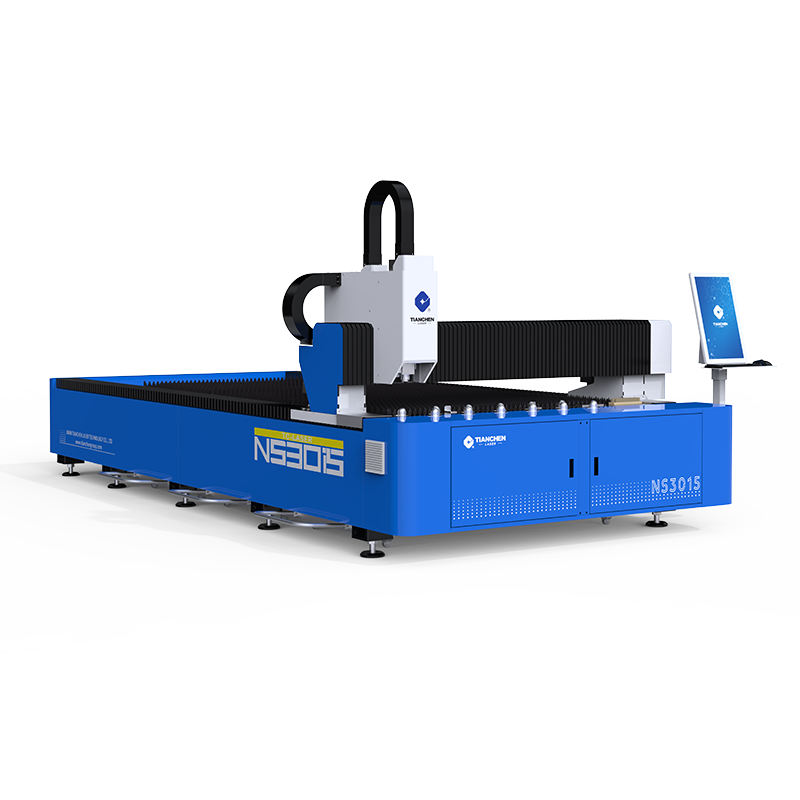
How a Laser Cutting Metal Machine Handles Tube Processing
A flatbed laser cutting metal machine cuts sheet metal on a stationary table with a moving gantry. Adding tube capability means adding a fourth dimension: the workpiece rotates while the laser head moves in three linear axes. This combination cuts complex profiles — miters, slots, holes, notches, and contours — on round, square, rectangular, and oval tubing in a single setup, eliminating secondary drilling, milling, and deburring operations.
Rotary Axis, Chuck Systems, and Nesting Software
A tube-capable laser cutting metal machine integrates a rotary chuck gripping the tube and rotating it under CNC control, synchronized with the laser head. Self-centering chucks align tubes within ±0.05 mm concentricity despite minor dimensional variation. A tailstock supports long tubes above 3 meters, preventing sag and vibration. Nesting software optimizes part placement along the tube, rotating and interleaving profiles to minimize waste. Advanced packages apply lead-in/lead-out paths and common-line cutting where adjacent parts share a cut edge.
Real-World Case — An Automotive Exhaust Fabricator Upgrades
A German exhaust fabricator previously cut stainless steel tubing across three separate workstations — a band saw for straight cuts, a CNC milling machine for holes and slots, and a drill press for mounting holes. Three machines meant three setups, manual material handling between stations, and cumulative tolerance stacking from repositioning the workpiece. A laser cutting metal machine with 4-meter tube capacity and 3 kW fiber laser source cut all profiles — miters for bend joints, oval slots for O2 sensor bungs, circular holes for mounting brackets — in a single setup on one machine. Production time per exhaust system dropped from 22 minutes to 4.5 minutes. Material waste decreased 12% because the nesting software optimized part distribution along each tube length. ROI was achieved in 14 months on labor savings alone.
Precision Factors in Tube Laser Cutting
Kerf Width, Heat-Affected Zone, and Cut Edge Quality
Kerf width for a fiber laser cutting metal machine is 0.1 mm to 0.3 mm, versus 1 mm to 3 mm for plasma — the narrow kerf enables tight nesting. The heat-affected zone is under 0.1 mm for fiber laser, versus 0.5 mm to 2 mm for plasma — critical for thin-wall tubing in medical devices and aerospace where microstructural changes affect corrosion resistance. Cut edge squareness is maintained within 0.05 mm, so parts fit together without post-cut grinding.
Material Compatibility and Wall Thickness Limits
Steel, Stainless, Aluminum, and Copper Tube Processing
A fiber laser cutting metal machine processes mild steel tubing up to 12 mm wall thickness, stainless steel up to 10 mm, aluminum up to 8 mm, and copper alloys up to 5 mm with a 3 kW to 6 kW laser source. Mild steel uses oxygen assist gas for exothermic reaction. Stainless and aluminum use nitrogen for clean, oxide-free edges. Copper and brass require back-reflection protection on the optical delivery system.
Selecting a Tube Laser Cutting System
Five Specifications That Drive Performance
First, maximum tube diameter and length — verify chuck and tailstock capacity for the largest workpiece. Second, laser power — 3 kW handles most tube applications; 6 kW is needed for thick-wall steel above 8 mm. Third, supported tube shapes — round, square, rectangular, oval, and open profiles like angle and channel. Fourth, automation level — manual, semi-automatic bundle, or fully automatic magazine-fed loading. Fifth, nesting software capability — common-line cutting, automatic lead-in/lead-out, and multi-part nesting. Tianchen Laser, with an intelligent manufacturing base producing over 10,000 units annually, offers laser cutting metal machine systems engineered for the precision and throughput demands of professional tube fabrication.
Frequently Asked Questions
How does a laser cutting metal machine handle round tubes?
A tube-capable laser cutting metal machine uses a rotary chuck rotating the tube under CNC control synchronized with the laser head, cutting complex profiles around the circumference in a single setup without repositioning.
What precision can a tube laser cutter achieve?
A fiber laser cutting metal machine achieves kerf widths of 0.1 mm to 0.3 mm, heat-affected zones under 0.1 mm, and cut edge squareness within 0.05 mm — eliminating secondary drilling, milling, and deburring.
What tube materials can a fiber laser cut?
A laser cutting metal machine with fiber laser cuts mild steel, stainless steel, aluminum, copper, and brass tubing across a range of diameters and wall thicknesses. Material-specific parameters — laser power, cutting speed, assist gas type and pressure — must be adjusted per material. Highly reflective metals like copper and brass require back-reflection protection.
What is the maximum wall thickness for tube laser cutting?
With 3 kW to 6 kW, a laser cutting metal machine cuts mild steel to 12 mm wall thickness, stainless steel to 10 mm, and aluminum to 8 mm. Copper alloys are limited to approximately 5 mm due to reflectivity.
Does tube laser cutting replace sawing and drilling?
Yes. A laser cutting metal machine with rotary axis cuts all profiles — straight cuts, miters, holes, slots — in a single setup, replacing the separate sawing, drilling, and milling operations of traditional tube fabrication.
How does nesting software reduce material waste?
Nesting software on a laser cutting metal machine optimizes part placement along the tube length, rotating and interleaving individual profiles for 8% to 15% material savings over manual nesting. Common-line cutting — where adjacent parts share a single cut edge — further reduces waste and shortens total cutting time per tube.