
 EN
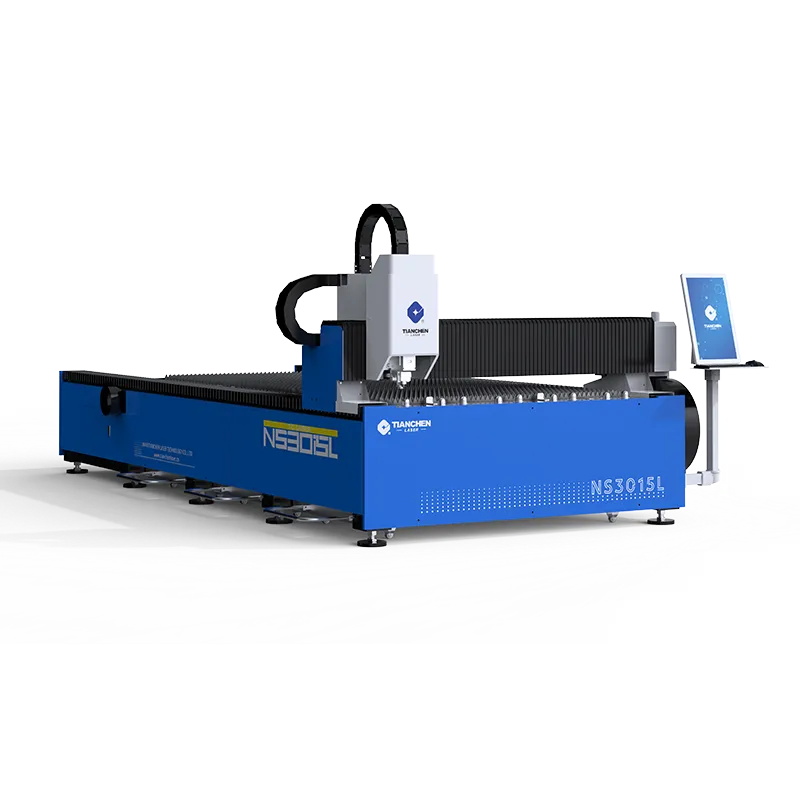
A Custom Job That Standard Gear Could Not Handle
A medical-equipment supplier needed stainless brackets with threaded inserts and engraved serials, in batches that changed every two weeks. Off-the-shelf cutting tables could not hold the insert tolerance while also marking the part in one pass. The team specified a laser cnc machine with a rotary marking head and a programmable clamp map, then loaded each batch as a parametric job. The laser cnc machine cut, marked, and located inserts without moving the sheet, which removed three handling steps that previously caused misalignment and scrap. The laser cnc machine became the anchor of the reconfigured cell, not just another tool.
The Part That Broke the Usual Workflow
Standard fixtures assumed rectangular parts on a fixed pitch. The medical bracket was an L-shape with a curved leg, so clamping one corner left the other free to lift under the beam. Earlier attempts warped the edge and scrapped whole lots. The laser cnc machine solved it with a vacuum zone and a soft locating pin that the program retracted after the first pierce, holding the part flat through the full path without a custom jig.
How the Cell Was Reconfigured
Rather than buy a bigger generic table, the shop kept the footprint and added software. The laser cnc machine now pulls batch parameters from the order record, so an operator selects a job number and the cut, mark, and insert sequence load together. Changeover that took 25 minutes on the old setup runs in under three, and the floor gained capacity without gaining square metres or extra staff on the line.
The Risk of Forcing Standard Tools
Pushing a non-standard part through a standard process creates failure modes that show up at the customer, not on the shop floor, and those failures cost far more than the tooling saved. A laser cnc machine forced onto standard fixtures loses the very advantage it was bought for.
When One Size Slows the Whole Line
A generic fixture forces operators to shim and re-clamp, which adds minutes per part and breaks the rhythm of the cell. Those minutes compound across a 400-piece order into a full lost shift. A laser cnc machine configured to the part family removes the shimming, so the line keeps a steady cadence instead of lurching through exceptions that nobody planned for.
Hidden Cost of Constant Retooling
Every manual re-fixturing is a chance to set the wrong offset. One shop tracked a recurring 0.3 mm shift to a clamp bolt that operators tightened by feel. The laser cnc machine replaced feel with a stored program, and the shift disappeared from the defect log. The saving was not the bolt; it was the removed decision point where error entered the process each time.
Engineering Custom Processing Paths
Custom does not mean complex for the operator. It means the complexity lives in the program, where it runs the same way every time the job is called, and the laser cnc machine makes variety cheap instead of costly.
Parametric Programs for Variable Lots
The laser cnc machine stores geometry as parameters rather than fixed lines, so a 120 mm bracket and a 140 mm version share one routine with a changed dimension. Engineering updates the value, not the drawing. This keeps small-batch variety affordable and lets the shop quote custom work without fear of setup creep eating the margin on short runs that standard tables cannot hold.
Fixture-Free Nesting on Odd Shapes
Odd contours nest poorly by hand but pack tightly under algorithm. The laser cnc machine places curved and L-shaped parts with micro-bridges that snap clean, lifting yield on irregular orders. Fixture-free cutting also means no custom jig to store, clean, or lose — a quiet win for shops short on rack space that still take varied contract work from regular accounts.
Compliance and Floor Value
A custom cell still has to meet the same safety and quality rules as a standard one, and those rules belong in the design, not the audit that follows a complaint. A laser cnc machine must still satisfy the standards a customer expects on every run.
ISO 9001 and ANSI Z136 Controls
ISO 9001 expects documented, repeatable process control, and the laser cnc machine's job records show which program, gas, and parameters cut each lot, so a quality review can trace a part back to its settings. ANSI Z136.1 governs safe use of industrial lasers and requires a fully enclosed beam path with interlocks, which the laser cnc machine ships with built in, even on custom configurations with added marking heads.
Matching the Machine and Upkeep
Buyers should list the actual part families, their materials, and how often the mix changes. A laser cnc machine tuned to a stable family runs simpler; one built for variety needs the parametric and nesting tools described above. Tianchen and similar suppliers document which part families a given machine handles, so the spec matches the mix instead of a brochure number. Switching between stainless and aluminium leaves residue, so a lens and bed clean between families protects edge quality and keeps traceability honest.
A shop that treats the cell as one system, not a collection of separate stations, gets the most from the laser cnc machine investment. The order record, the program library, and the clean between materials all feed the same goal: less handling and fewer chances for error. Documenting the routine turns custom work from a craft into a process the whole team can run, which is what keeps the margin steady as batches change.
Frequently Asked Questions
Can one laser cnc machine handle custom part families?
Yes. A laser cnc machine with parametric programs and fixture-free nesting handles varied families from one bed by changing stored values rather than physical tooling. Odd shapes pack under software, and marking or insert steps join the cut path. The key is matching the controller and clamp map to the actual part mix before purchase, not after the first scrap lot arrives.
Does custom configuration raise safety risk?
No, if the enclosure meets ANSI Z136.1 and OSHA 29 CFR 1910.212. Adding marking heads or clamps does not remove the beam guard or interlocks. A laser cnc machine built for custom work ships with contained path and access control, so unattended or varied runs stay within the same safety envelope as standard cutting on the floor.
How fast is changeover between batches?
With parametric jobs, an operator selects the batch and the laser cnc machine loads cut, mark, and insert settings together. Shops report changeover under three minutes versus twenty-plus on manual fixtures. The saving comes from removing physical re-clamping, not from cutting faster on any single part during the run itself.
What traceability does a custom cell provide?
The laser cnc machine records program, gas, and parameters per lot, supporting ISO 9001 process control. A quality reviewer can trace a returned part to its exact settings. That documented history lets a custom fabricator answer customer audits with evidence instead of reconstruction after the order ships and the records scatter across shifts.
Is fixture-free cutting accurate enough?
For most sheet parts, yes. Vacuum zones and soft locating pins hold the part flat through the pierce, and the laser cnc machine keeps the beam focused by height sensor. Tight-tolerance or very thin stock may still need light clamping, but fixture-free nesting covers the bulk of mixed production without custom jigs taking up rack space.
When should a shop avoid custom laser work?
Custom cutting suits shops with steady variety and margin to protect. A laser cnc machine for one fixed, high-volume part may be better served by simpler tooling. If orders are few and identical, the cost of parametric software and nesting tools may outweigh the handling time they save across a quiet month of repeat work.