
 EN
EN
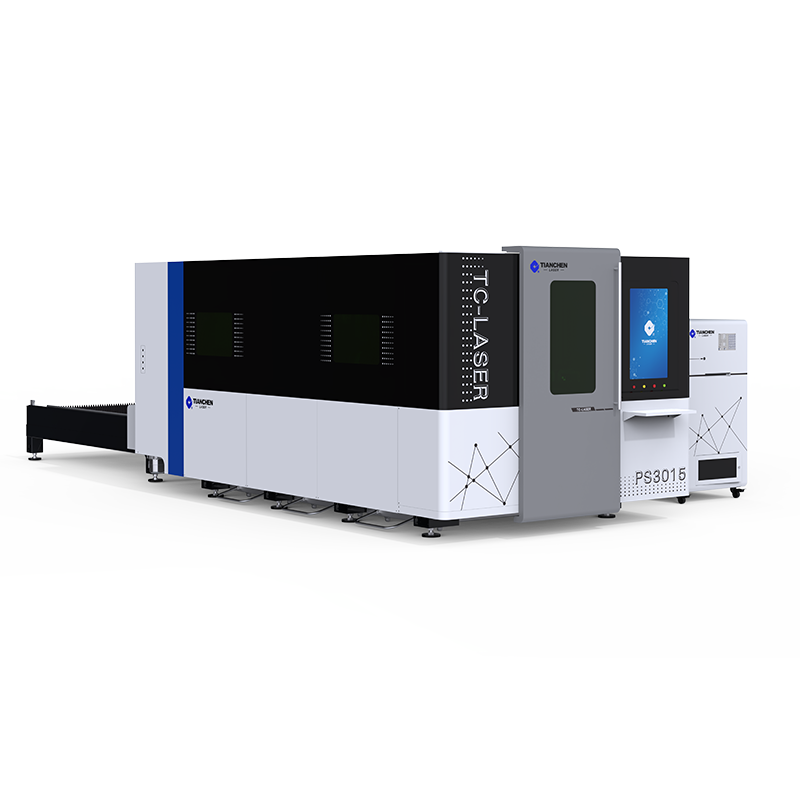
Automated Material Handling for Continuous Metal Laser Cutting
Pallet Changers and Stack Feeders Eliminate Manual Loading Downtime
Automated material handling systems—such as robotic pallet changers and stack feeders—enable uninterrupted metal laser cutting by removing manual sheet loading. Vacuum lifts position raw materials with sub-millimeter precision, while synchronized loading/unloading cycles keep the laser engaged during swaps—critical for high-mix, low-volume production. This eliminates alignment errors and reduces idle time by up to 70% versus manual methods, supporting 30% higher output and 20% lower labor costs.
| Automation Component | Impact on Laser Cutting Efficiency |
|---|---|
| Robotic Pallet Changers | Reduces changeover time to <90 seconds |
| Stack Feeders | Enables 24/7 processing of standardized batches |
| Integrated Conveyors | Cuts material handling time by 50% |
ROI Analysis: Balancing Floor Space, Throughput, and Batch Flexibility
Evaluating automation ROI requires balancing three interdependent factors: machinery footprint, throughput velocity, and job flexibility. Compact tower-based systems maximize vertical space but excel in high-volume, low-variability runs; modular conveyors support custom batches at the cost of 15–20% more floor area. Industry data shows automated material handling delivers 40% higher throughput per square meter of factory space. For small-batch specialists, semi-automated solutions with quick-change fixtures strike the optimal balance—achieving 85% machine utilization without compromising agility.
End-to-End Workflow Optimization via Smart Software Integration
Cloud-Based CAM-Automation Sync for Adaptive Nesting and Tabbing
Cloud-connected CAM systems integrate directly with laser automation to enable adaptive nesting and intelligent tabbing—adjusting cut paths in real time based on material properties and machine performance metrics. This eliminates manual programming delays and boosts sheet utilization by 15–22%. Intelligent tabbing preserves part integrity during high-speed cutting, while closed-loop feedback refines kerf compensation and pierce points automatically—reducing reliance on post-cut inspection. Setup time drops by 60%, scrap declines, and production teams gain seamless data flow from design to fabrication. According to Technavio, such integrated workflows lift productivity in metal laser cutting operations by 30%.
Tangible Labor and Cost Efficiency Gains from Automated Metal Laser Cutting
Automated metal laser cutting delivers measurable labor and cost efficiencies. Fabricators realize 30–50% labor cost reductions by eliminating repetitive handling tasks, while precision nesting algorithms cut material waste by 25–35%. Sensor-driven correction and cloud-based scheduling further optimize throughput, enabling continuous high-output operations with minimal supervision. Crucially, automation reduces workplace injuries by 75–90%—lowering insurance premiums and unplanned downtime. These cumulative gains typically deliver ROI within 18–24 months. The operational shift also empowers skilled technicians to focus on quality assurance and complex setups, elevating workforce value while sustaining 24/7 production capability.
FAQ
What is the advantage of using robotic pallet changers?
Robotic pallet changers significantly reduce changeover times to less than 90 seconds, enabling continuous operation and minimizing downtime.
How do stack feeders improve efficiency in metal laser cutting?
Stack feeders enable round-the-clock processing of standardized batches, ensuring continuous operation without manual intervention.
What are the ROI benefits of automated material handling systems?
Automated systems deliver higher throughput, reduce idle time and labor costs, and often achieve ROI within 18-24 months by optimizing floor space and batch flexibility.
How does smart software integration enhance laser cutting operations?
Smart software integration with cloud-based CAM systems facilitates real-time adaptive nesting and tabbing, improving sheet utilization and productivity while reducing manual programming delays.