
 EN
EN
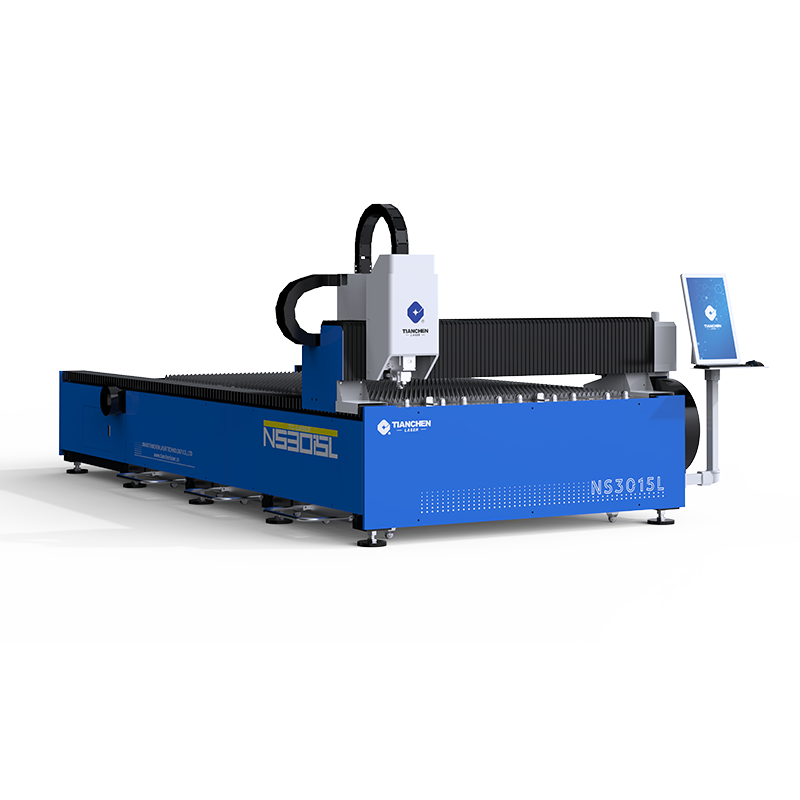
Why Automotive Applications Demand Sub-50 Micron Precision in Laser Cutting Machines for Metal
Tolerance Requirements Across Critical Auto Components (Brackets, Chassis, EV Battery Trays)
Automotive manufacturing mandates micron-level accuracy for safety-critical components. Mounting brackets require ±40 µm tolerances to ensure precise bolt-hole alignment; chassis rails must hold ≤50 µm dimensional stability to preserve structural integrity; and EV battery trays demand <30 µm flatness on sealing surfaces to prevent coolant leakage and mitigate thermal runaway risks. These specifications are codified in IATF 16949, making sub-50 µm capability a baseline requirement—not an upgrade—for laser cutting machines for metal.
Typical Tolerance Specifications:
| Component | Critical Tolerance | Failure Consequence |
|---|---|---|
| Mounting Brackets | ±40 µm | Assembly misalignment |
| Chassis Sections | ≤50 µm | Frame distortion |
| EV Battery Trays | <30 µm | Coolant leakage / thermal failure |
Real-World Impact of Precision Failure: Fitment Errors, Rework Costs, and OEM Compliance Risks
Exceeding 50 µm tolerance triggers cascading production failures. Body panel misalignment can produce fitment gaps over 1.5 mm—causing line stoppages and rework costing $500,000+ per incident (Ponemon Institute, 2023). More critically, ±70 µm deviations in battery tray geometry increase fire risk by 34% due to compromised thermal management (NFPA, 2024). Such defects violate OEM compliance protocols, risking contract termination, certification suspension, and 37% longer audit cycles following precision-related recalls. Sub-50 µm precision is therefore foundational—not optional—to automotive manufacturing viability.
Fiber Laser Cutting Machines for Metal: The Dominant Choice for Automotive Sheet and Tube Fabrication
Why Fiber Lasers Outperform CO₂ and Nd:YAG for Reflective Metals and Thin-to-Medium Thicknesses (0.5–12 mm)
Fiber laser cutting machines for metal dominate automotive fabrication due to superior absorption in reflective alloys like aluminum and copper—achieving up to 35% higher energy coupling than CO₂ or Nd:YAG systems. This enables high-speed, high-fidelity processing: 20–40 m/min on thin sheet (0.5–6 mm) and stable precision on medium-thickness tubes (6–12 mm). Operational advantages include 50% lower power consumption and reduced assist gas dependency—directly lowering cost-per-part in high-volume lines.
Key Performance Metrics: Beam Quality (M² < 1.1), Power Stability (<±1%), and Cut Speed Consistency
Three metrics define automotive-grade fiber laser performance:
- Beam quality (M² < 1.1): Enables diffraction-limited focus for burr-free cuts on AHSS brackets.
- Power stability (<±1%): Prevents thermal distortion during continuous chassis production.
-
Cut speed consistency: Sustains ±0.05 mm positional accuracy across 10,000-unit batches.
Together, these reduce post-processing needs and cut rework costs by up to $52,000/month per production line (Automotive Manufacturing Solutions, 2023).
Machine Architecture Essentials That Ensure Repeatable Precision in Production Environments
Motion Systems: Linear Motors vs. Rack-and-Pinion — Repeatability, Acceleration, and Thermal Drift Implications
Motion system selection directly determines long-term precision. Linear motors deliver <5 µm repeatability and acceleration exceeding 3g—essential for complex automotive contours—while maintaining ±2 µm thermal stability over 8-hour shifts (2024 Precision Engineering Report). In contrast, rack-and-pinion systems suffer >20 µm thermal drift under sustained load, introducing dimensional variance in chassis parts. Their 1.5 ms latency and bi-weekly backlash compensation further erode consistency—making linear drives the standard for repeatable sub-50 µm performance.
Adaptive Optics & Real-Time Focal Control: Mitigating Thermal Lensing in High-Power (6–12 kW) Metal Cutting
At 6–12 kW, thermal lensing can shift focal position by up to 0.6 mm—compromising kerf uniformity in EV battery trays. Advanced systems counter this with:
- Deformable mirrors, correcting beam divergence at 500 Hz;
- Closed-loop Z-axis control, adjusting focal depth within 5 ms of thermal detection;
-
Multi-sensor monitoring, using coaxial pyrometers and beam analyzers to trigger corrections.
This architecture reduces scrap by 18% when cutting 8 mm AHSS (Laser Tech Journal, 2023), sustaining ±0.02 mm focal stability despite nozzle temperature swings up to 400°C—and eliminating manual recalibration during extended runs.
Material-Specific Optimization for Common Automotive Metals on Laser Cutting Machines for Metal
Stainless Steel 304, Aluminum 6061-T6, and Advanced High-Strength Steels: Assist Gas, Nozzle Design, and Kerf Management
Achieving sub-50 µm precision demands alloy-specific optimization. For stainless steel 304, nitrogen assist gas prevents oxidation while tapered nozzles ensure consistent pressure—keeping kerf variation below 0.1 mm. Aluminum 6061-T6 requires 15–20 bar nitrogen, anti-spatter nozzles, and 5–10% kerf compensation to offset thermal expansion. AHSS calls for oxygen-assisted exothermic cutting, dual-layer nozzles to manage slag ejection, and springback-adjusted kerf offsets. Applied rigorously, these protocols sustain dimensional accuracy within ±0.05 mm and reduce scrap rates by up to 30% in volume production.
FAQ
What is the significance of sub-50 micron precision in automotive laser cutting?
Sub-50 micron precision is crucial to prevent production failures such as assembly misalignment, frame distortion, and coolant leakage, which can have severe consequences, including compromised safety and increased production costs.
Why are fiber laser cutting machines preferred in automotive fabrication?
Fiber lasers outperform other systems due to superior absorption in reflective alloys and offer high-speed, high-fidelity processing with lower power consumption, making them ideal for automotive manufacturing.
What role do motion systems play in achieving precision?
Motion systems like linear motors ensure long-term precision by offering repeatability and thermal stability, making them suitable for maintaining dimensional accuracy in automotive components.
How can thermal lensing issues in high-power metal cutting be mitigated?
Thermal lensing can be mitigated through advanced technologies such as deformable mirrors, closed-loop control systems, and multi-sensor monitoring that maintain focal precision.
Table of Contents
- Why Automotive Applications Demand Sub-50 Micron Precision in Laser Cutting Machines for Metal
- Fiber Laser Cutting Machines for Metal: The Dominant Choice for Automotive Sheet and Tube Fabrication
- Machine Architecture Essentials That Ensure Repeatable Precision in Production Environments
- Material-Specific Optimization for Common Automotive Metals on Laser Cutting Machines for Metal