
 EN
EN
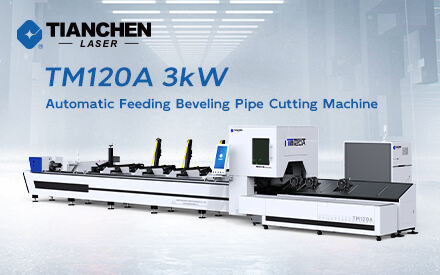
Why Automation Is Essential for Modern Laser Metal Cutting Machines
Modern manufacturing demands unprecedented efficiency and precision—making automation indispensable for laser metal cutting machines. Automated loading and unloading systems enable 24/7 operation with minimal human intervention, boosting throughput by up to 40% while reducing labor needs by 80% (Fabrication Efficiency Report 2024). This continuous processing capability is critical for meeting tight deadlines in aerospace and automotive sectors. Beyond productivity gains, automation delivers:
- Enhanced precision: Robotic handling eliminates manual positioning errors, achieving tolerances within ±0.1mm consistently
- Improved safety: Reduced human interaction with cutting zones decreases injury risks by 65% (Industrial Safety Journal 2023)
- Cost optimization: Lower scrap rates and energy consumption cut operational expenses by 30% over manual processes
The transition to automated systems isn’t merely advantageous—it’s a strategic necessity for maintaining competitiveness in high-mix, low-volume production environments. As material costs rise and skilled labor shortages persist, manufacturers who delay automation risk significant operational bottlenecks. Initial investments pay dividends through faster ROI timelines, often within 18 months, validating automation as the cornerstone of modern metal fabrication.
Core Automation Components: Auto-Loaders, Robotic Handling, and Smart Feeding Systems
Automated laser metal cutting machines rely on three key subsystems to eliminate manual workflows: auto-loaders for continuous raw material intake, robotic arms for precise part manipulation, and sensor-driven feeding systems that adapt to material variations. These components synchronize to reduce idle time by 35% while maintaining micron-level cutting accuracy across high-volume production cycles.
Suction Cup Lifters, Fork Systems, and Slat Table Integration for Sheets and Tubes
Material-specific handling solutions ensure damage-free transport:
- Vacuum-based suction cups lift flat sheets without surface scratches
- Programmable fork systems lift nested tubes or irregular profiles
- Slat conveyors with adjustable rollers position materials at optimal cutting angles
This minimizes handling errors and accelerates changeovers between dissimilar materials like aluminum or stainless steel.
Microtabbing and Kerf-Aware Part Removal for Seamless Downstream Compatibility
Advanced software prevents cut parts from shifting during extraction by:
- Automatically adding microscopic tabs (<0.5mm) to hold components
- Calculating optimal robotic gripper paths based on kerf width
- Adjusting suction force to prevent thin materials from warping
This enables immediate transfer to bending or welding stations without re-fixturing.
End-to-End Workflow Automation: Denesting, Sorting, Palletisation, and Traceability
True automation extends far beyond the cutting process itself. Modern laser metal cutting machines achieve peak efficiency through integrated systems handling material prep, part management, and post-processing. This eliminates manual bottlenecks while ensuring traceability and precision handling from raw stock to finished components. Automated denesting lifts sheets or tubes efficiently using vacuum or magnetic lifters, feeding material consistently into the cutting area. Post-cut, intelligent sorting systems categorize parts based on geometry or job ID via integrated vision systems, directing them to designated stacking zones or downstream processes. Robotic palletisation then stacks finished components systematically, optimizing crate or pallet space for storage or shipment. Crucially, every step is digitally tracked.
Gripper-Based Denesting and RFID-Enabled Part-Level Tracking
Advanced gripper systems provide unmatched flexibility in denesting diverse sheet stacks or tube bundles, adapting suction or pressure settings to material type and thickness to prevent surface damage. This seamless handoff to the laser metal cutting machine minimizes idle time. For traceability, RFID tags embedded in pallets or directly attached to critical parts (via micro-tagging) enable granular tracking throughout the workflow. Each component's journey—from denesting, through cutting and sorting, to final palletisation—is logged in real-time. This creates an auditable digital thread, essential for quality control, compliance, and rapid issue resolution in high-mix production environments.
Smart Integration: CNC, OPC UA, and Machine-to-Machine Coordination in Laser Metal Cutting Machines
Modern laser metal cutting machines achieve peak efficiency through integrated Computer Numerical Control (CNC) systems and Open Platform Communications Unified Architecture (OPC UA) protocols. These technologies enable real-time machine-to-machine coordination, eliminating manual data transfers while synchronizing cutting parameters with auxiliary equipment like robotic arms and conveyors. By standardizing communication between devices—from material handlers to quality inspection stations—manufacturers reduce setup time by 30% and minimize human error in complex production runs. OPC UA’s secure data modeling allows bidirectional feedback loops where downstream machines automatically adjust operations based on laser output metrics. This creates self-optimizing workflows where cutting speed adapts to material thickness variations detected by IoT sensors, maintaining ±0.1mm precision across batches. Crucially, unified control systems prevent software conflicts between CAD/CAM platforms and peripheral CNC tools, ensuring G-code compatibility without syntax errors. The result is a 22% higher equipment utilization rate (Journal of Manufacturing Systems 2023) through continuous operation, where denesting, cutting, and sorting subsystems function as a single autonomous unit.
FAQ
Why is automation crucial in laser metal cutting machines?
Automation is crucial for increasing efficiency, precision, and safety in laser metal cutting operations. It reduces labor costs, minimizes human error, and maximizes throughput, making it vital for sectors like aerospace and automotive.
What are the core components of automated laser metal cutting machines?
The core components include auto-loaders for material intake, robotic arms for manipulation, and smart feeding systems to handle material variations, ensuring a seamless, efficient workflow.
How does automation influence safety in metal cutting?
Automation reduces human interaction with cutting zones, decreasing the risk of injuries significantly by preventing manual errors and maintaining safe operation zones.
What is smart integration in laser metal cutting machines?
Smart integration involves using advanced control systems like CNC and OPC UA protocols to synchronize and optimize machine operations, enhancing precision and reducing setup times.
How does RFID contribute to the process?
RFID tags are used for part-level tracking, providing real-time data on each component's journey through the production line, which is crucial for quality control and compliance.
Table of Contents
- Why Automation Is Essential for Modern Laser Metal Cutting Machines
- Core Automation Components: Auto-Loaders, Robotic Handling, and Smart Feeding Systems
- End-to-End Workflow Automation: Denesting, Sorting, Palletisation, and Traceability
- Smart Integration: CNC, OPC UA, and Machine-to-Machine Coordination in Laser Metal Cutting Machines
- FAQ