
 EN
EN
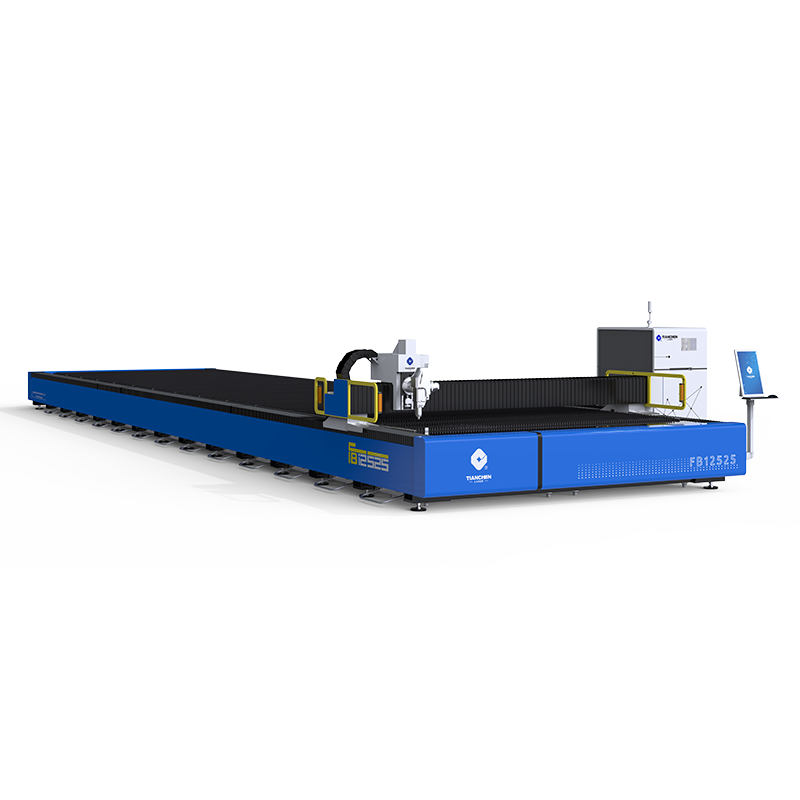
Why Small Factories Are Adopting Laser Cutting Machines for Sheet Metal
From plasma and manual methods to precision fiber laser cutting for sheet metal
Small factories are rapidly transitioning from traditional plasma cutting and manual sawing to fiber laser cutting machines for sheet metal—driven by transformative gains in precision, speed, and operational flexibility. Plasma systems often induce heat distortion on thin materials, while manual methods demand extensive post-processing; fiber lasers deliver clean, burr-free cuts in seconds, reducing secondary operations by up to 90%. This leap in capability enables small-batch production of complex aerospace or medical components previously outsourced to larger facilities. Modern compact fiber laser systems occupy minimal floor space yet process materials from 0.5 mm aluminum to 12 mm mild steel—ideal for space-constrained workshops. With no custom tooling required, setup costs drop significantly, making economically viable the production of small orders (10–50 units) that were once impractical.
Adoption trends: 68% of U.S. job shops under 20 employees added a laser cutting machine for sheet metal (2021–2023)
Industry data reveals a seismic shift: 68% of U.S. job shops with fewer than 20 employees invested in laser cutting technology between 2021 and 2023. Three interrelated drivers fuel this surge. First, ROI timelines have compressed to under 18 months as machine prices dropped 30% and cutting speeds increased 40% (Fabricators Quarterly, 2023). Second, cloud-based nesting software now enables small teams to achieve up to 95% material utilization—critical when stainless steel costs $3.2/kg. Third, the technology unlocks premium contracts; a Wisconsin auto-parts supplier with 15 staff landed $740k in new business after replacing their plasma table with a 2 kW fiber laser cutter. This trend reflects a broader strategic shift where compact laser systems help small factories overcome scalability barriers through:
- Phased automation – Entry-level machines meet immediate needs while supporting future power upgrades
- Skillset transition – Intuitive software lowers the barrier to operation, reducing reliance on highly specialized personnel
- Supply chain resilience – On-demand production replaces costly, vulnerable inventory stockpiles
| Adoption Factor | Impact on Small Factories | Statistic |
|---|---|---|
| ROI Timeline | Faster capital recovery | <18 months (Fabricators Quarterly, 2023) |
| Material Savings | Reduced raw material costs | Up to 95% utilization achievable |
| New Revenue Streams | Access to premium contracts | $740k average new business |
Precision, Speed, and Waste Reduction with a Small Laser Cutting Machine for Sheet Metal
Achieving ±0.1 mm tolerances and burr-free cuts on mild steel, stainless steel, and aluminum
Modern small fiber laser cutting machines consistently hold ±0.1 mm dimensional tolerances across mild steel, stainless steel, and aluminum—enabling high-integrity parts without secondary finishing. The non-contact process prevents mechanical deformation, while the focused beam maintains kerf widths under 0.5 mm. This level of control is especially valuable for medical device housings, aerospace brackets, and thin-gauge structural components. Studies show laser cutting achieves over 94% raw material utilization—significantly outperforming plasma’s typical 70–80%—directly improving yield and margins in resource-sensitive small-factory environments.
Case study: 43% faster prototyping for a 12-employee aerospace subcontractor using a 1.5 kW laser cutting machine for sheet metal
A 12-employee aerospace subcontractor dramatically accelerated its prototyping cycle after installing a 1.5 kW fiber laser system. Previously requiring 14 days for bracket and housing iterations using manual milling, it now completes complex titanium and high-tensile steel prototypes in just 8 days—a 43% reduction. Automated nesting software lifted material utilization on expensive alloys from 75% to 89%, while CNC programming cut setup times by 65%. These improvements enabled the shop to accept 30% more client projects annually—without adding staff—demonstrating how appropriately scaled laser technology empowers small manufacturers to compete in precision-critical markets.
Key Selection Criteria for a Small Laser Cutting Machine for Sheet Metal
Optimal power range (1–2 kW) and material thickness compatibility for small-factory workflows
For most small-factory applications involving mild steel, stainless steel, or aluminum sheets, a 1–2 kW fiber laser delivers the ideal balance of performance, energy efficiency, and cost control. This range cleanly processes materials up to 6 mm thick—sufficient for the vast majority of sheet metal fabrication work—while avoiding the inefficiencies of mismatched power: underpowered systems struggle with thicker stock, and overpowered units waste energy on thin-gauge work. Prioritize machines with fine-tuned, adjustable parameters that align with your primary material thicknesses. For instance, a 1.5 kW system typically holds ±0.1 mm tolerance on 1–4 mm stainless steel—eliminating secondary finishing for most small-batch jobs.
Evaluating scalability: When 'entry-level' laser cutting machines for sheet metal enable phased growth
Entry-level systems serve as strategic growth catalysts when selected for long-term adaptability. Look for modular platforms that support future power upgrades—from 1 kW to 2 kW—without full replacement. Equally important are compatibility with automated material handling and software architecture designed to scale with production volume. According to the 2023 Fabricators Benchmark Report, 62% of shops starting with base-model lasers achieved 40% capacity growth within 18 months through phased enhancements—such as adding advanced nesting modules or integrated fume extraction. This approach minimizes upfront investment while preserving a clear, low-risk path to expanded capabilities.
Material Versatility and Design Flexibility of Small Laser Cutting Machines for Sheet Metal
Small fiber laser cutting machines offer exceptional material versatility—processing reflective metals like aluminum (up to 6 mm), copper alloys, stainless steel, and even non-metallic composites—all on a single platform with minimal retooling. This adaptability allows small factories to pivot seamlessly between diverse production demands: cutting titanium aerospace components one hour and etching acrylic signage the next. The non-contact process preserves material integrity even with intricate geometries—achieving features impossible with mechanical methods without costly tool changes. Fiber optics also unlock multi-process functionality, including engraving, marking, and surface texturing—transforming a single laser system into a flexible, multi-role workstation. By eliminating dedicated tooling per material, small shops slash operational overhead and accelerate prototype development—particularly valuable for custom orders in ≤500-unit batches, where design agility defines competitive advantage.
FAQ
Why are small factories adopting laser cutting machines?
Small factories are adopting laser cutting machines because they offer significant gains in precision, speed, and operational flexibility compared to traditional methods like plasma cutting and manual sawing.
What are the main benefits of using a fiber laser cutting machine for sheet metal?
Fiber laser cutting machines provide clean, burr-free cuts quickly and reduce secondary operations by up to 90%, making them ideal for space-constrained workshops.
How do laser cutting machines achieve high material utilization?
Laser cutting machines, especially with cloud-based nesting software, can achieve up to 95% material utilization, crucial when raw material costs are high.
What power range is suitable for small-factory workflows?
For small-factory applications, a fiber laser power range of 1–2 kW is ideal for balancing performance, energy efficiency, and cost control.
Table of Contents
- Why Small Factories Are Adopting Laser Cutting Machines for Sheet Metal
- Precision, Speed, and Waste Reduction with a Small Laser Cutting Machine for Sheet Metal
- Key Selection Criteria for a Small Laser Cutting Machine for Sheet Metal
- Material Versatility and Design Flexibility of Small Laser Cutting Machines for Sheet Metal
- FAQ