why the gas matters more than the power rating
When a machine is bought, everyone compares power — 6 kW, 12 kW, 20 kW, 30 kW. Six months in, the line item that actually costs money every day is something else: the assist gas.
The reason is simple. Power is a one-time purchase, fixed the moment it is specified. Gas is a monthly expense that follows the work. A carbon steel structural part and a stainless decorative panel differ in gas type, gas volume and downstream process, and the gap in cost per part can be several times over.
This note does not walk through a specification table. It covers three things: what each of the three gases does inside the kerf, where the differences in cut face come from, and how to choose against the work on your own floor. By the end you should be able to decide without taking a supplier's recommendation.
1. The laser does two things in the kerf. The gas does three.
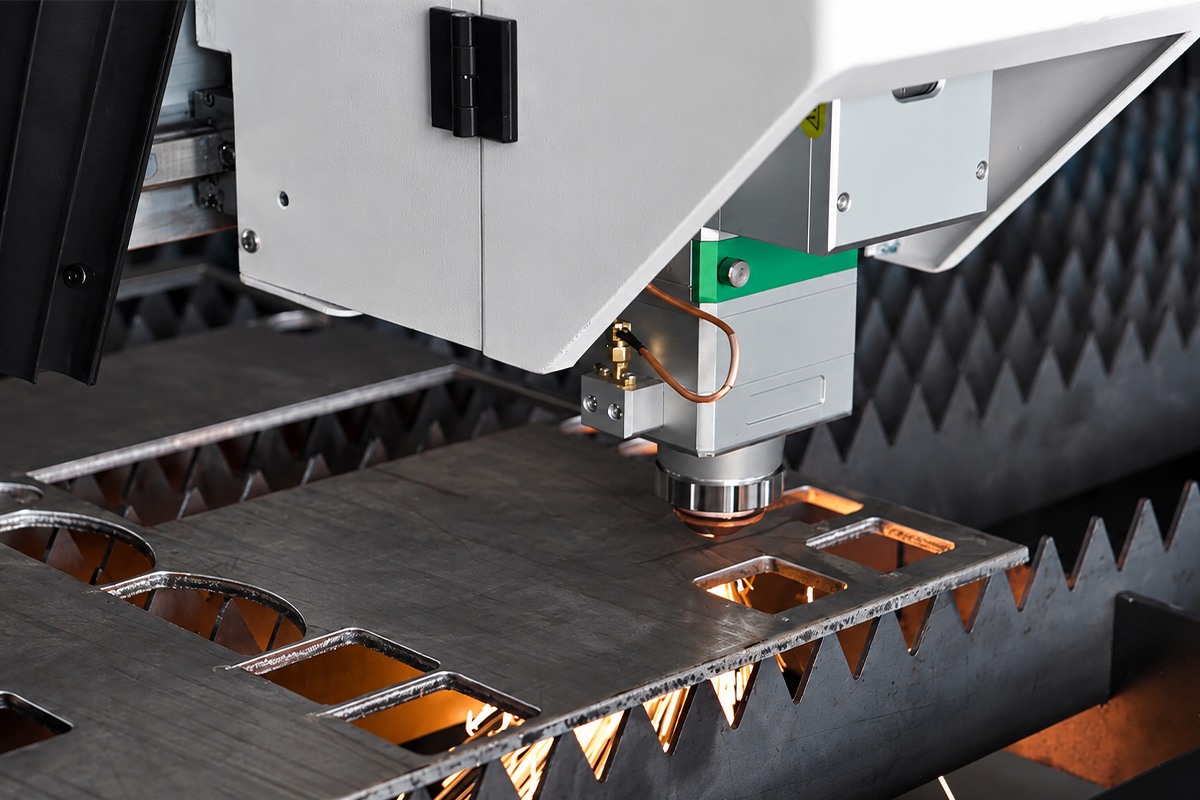
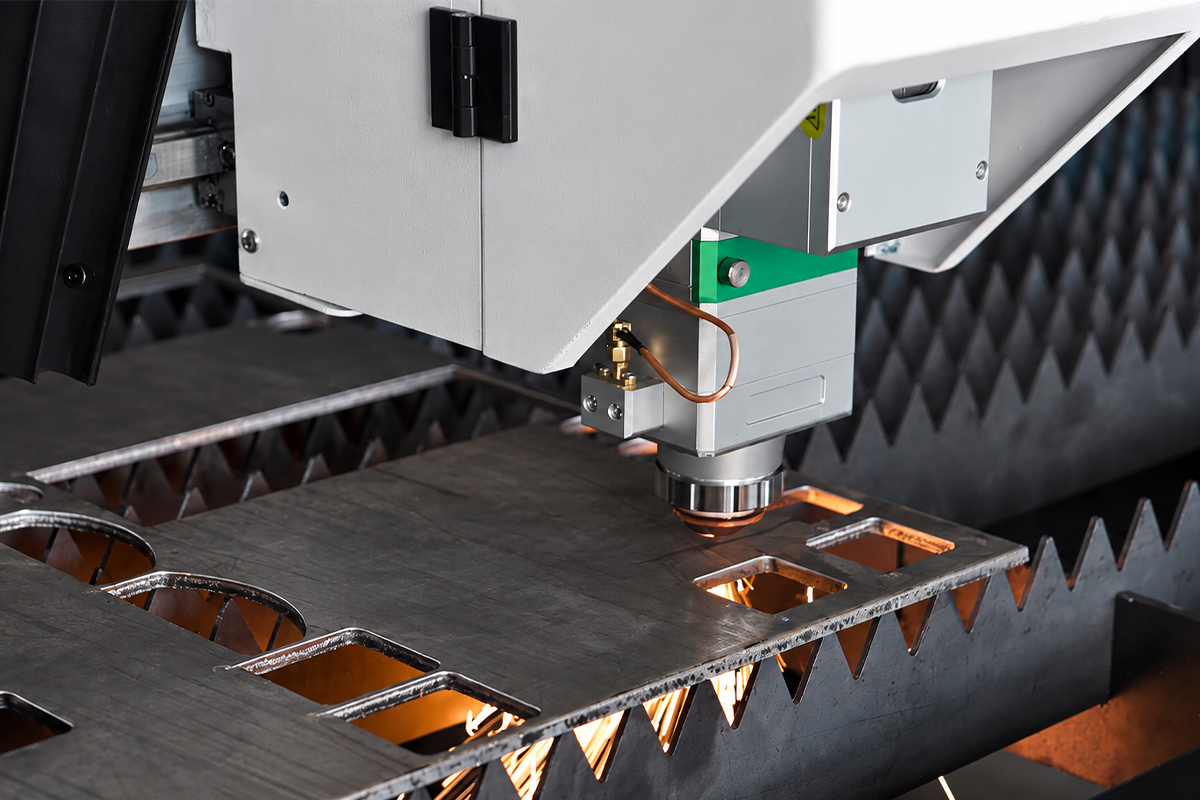
Cutting is often imagined as the beam burning through steel. The beam actually does two jobs: it heats the material locally to melting or vaporisation, and it sustains that condition. What opens the kerf is the assist gas.
Inside the kerf the gas does three jobs at once.
It clears the molten material. Metal melted by the beam will, if left in place, resolidify and bond to the cut edge. That is dross. A high-velocity stream ejects the molten material through the bottom of the kerf, and only then is a cut formed.
It takes part in a chemical reaction, or deliberately does not. This is where the three gases divide. Oxygen reacts with iron exothermically, and the additional heat helps cut deeper and faster. Nitrogen is inert: it joins in nothing and only clears material physically. Compressed air carries roughly a fifth oxygen, which places it between the two, with a mild exothermic contribution.
It protects and cools. An inert gas keeps the kerf from oxidising and carries excess heat away, limiting the heat-affected zone. If pressure or flow falls short, the first two jobs degrade — which is why "not enough pressure" so often presents as "not enough power."
Once those three jobs are clear, every difference in cut face, and in cost downstream, can be derived rather than memorised.
2. Three gases, three cut faces
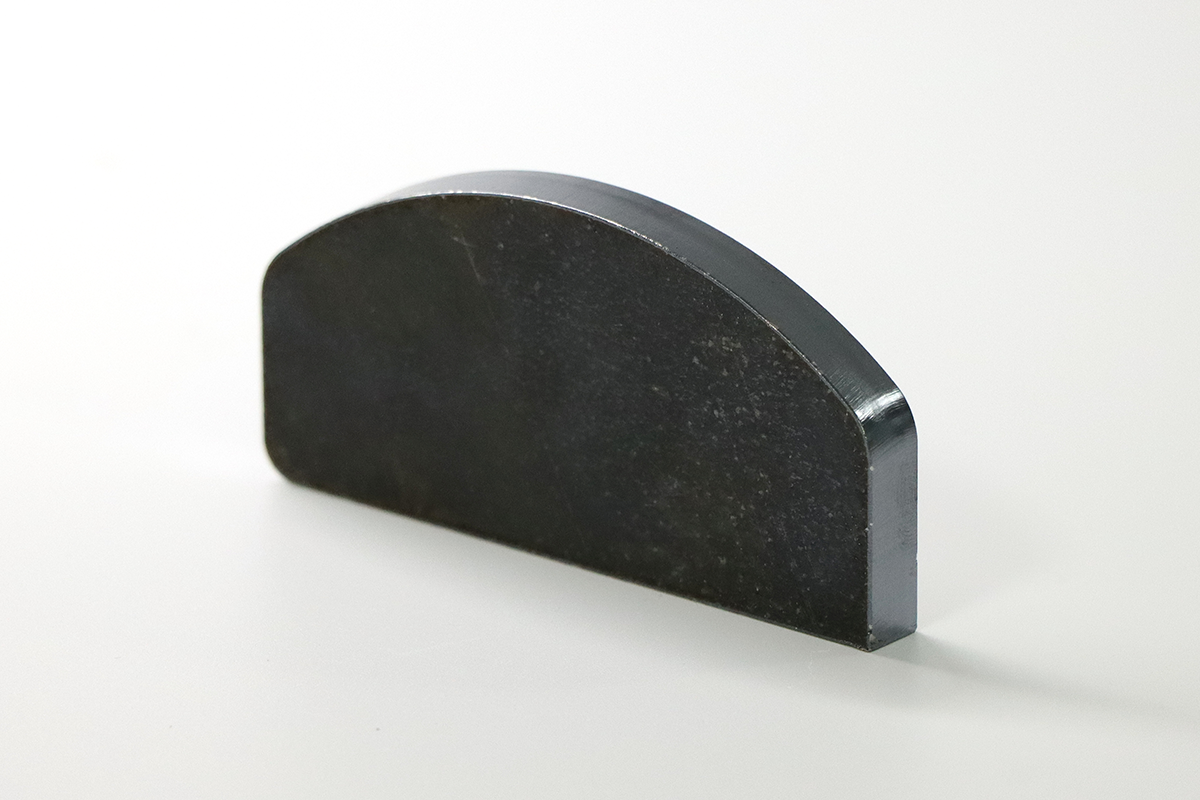
Oxygen: fast and deep, but the edge is oxidised. Oxygen cutting is really ignition plus combustion support. At temperature, iron reacts with oxygen to form iron oxide and releases substantial heat, which combines with the beam to cut well beyond what pure melting allows. The advantage is thickness and speed; this is the main route for medium and thick carbon steel. The price is an oxide layer on the cut edge — grey-black through blue-violet — plus a thin oxidised zone at the boundary. Structural strength is unaffected, but everything after is affected: welding needs preparation, painting needs the scale removed or adhesion fails, and appearance parts do not pass inspection. Oxygen therefore has a clear territory: carbon steel, medium to thick plate, work headed for machining or structural welding, where edge colour is irrelevant.
Nitrogen: slower and dearer, but the face is clean. Nitrogen does not react. Cutting depends entirely on the beam melting the material and the gas clearing it away. Without the free heat of oxidation, the same thickness needs more power and higher pressure, and the speed is lower. What the money buys is the face: bright, oxide-free, ready for welding or polishing. Stainless, aluminium and galvanised sheet use nitrogen whenever appearance or weld quality matters. Nitrogen costs more in two places. The gas is priced by purity, and higher purity costs more; it also demands high pressure, which means high consumption. This is why shops cutting mostly carbon steel sometimes burn money on a stainless steel gas habit.
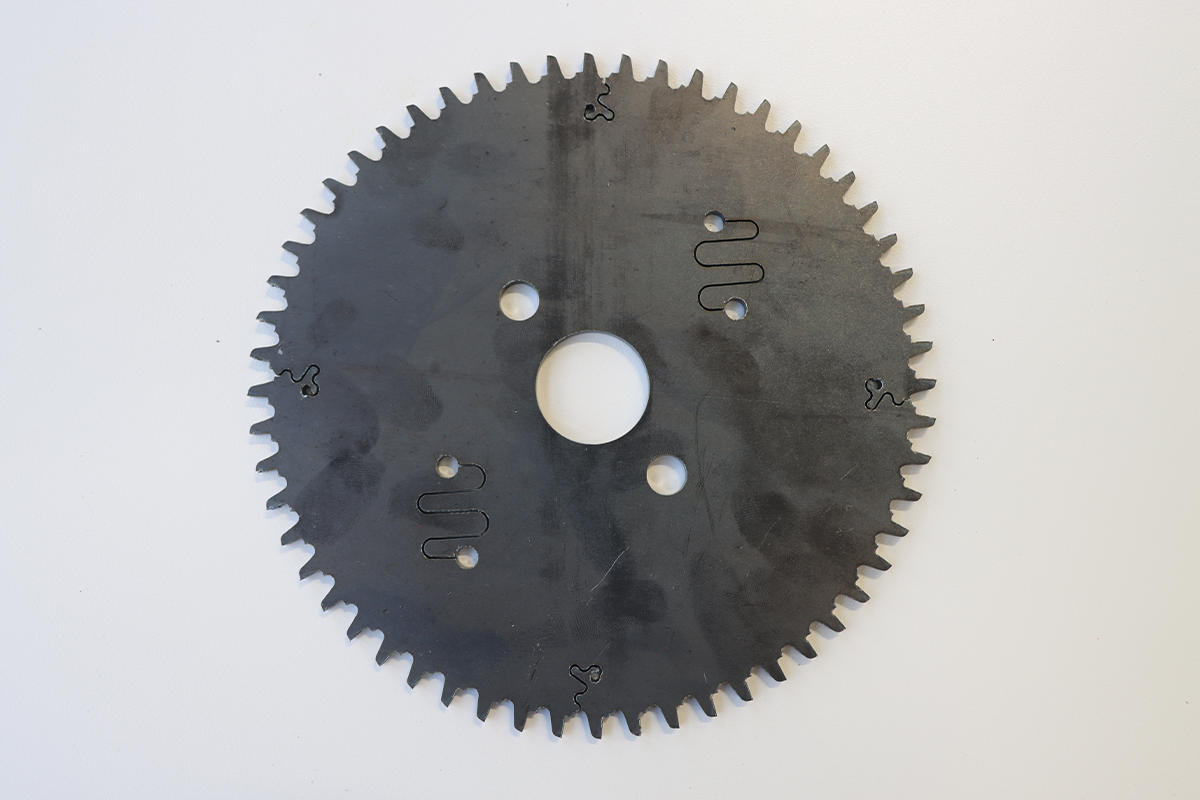
Compressed air: in between, and the cheapest. Air contains oxygen, so there is a mild exothermic contribution — faster and cheaper than nitrogen. The edge carries a light yellow or grey tint, far lighter than the grey-black of oxygen. Its territory is equally clear: work that will be painted or coated, structural parts, anything where edge colour is not inspected. Carbon steel thin-to-medium plate cuts fast and economically on air. Stainless can also be cut on air, but the face is not bright — where a customer requires no discolouration beside a weld, nitrogen comes back. One fact is routinely overlooked: in most shops, only part of the work genuinely requires nitrogen. Brackets, frames, machine bases and sheet metal headed for paint never needed a bright edge. Separating that work from the nitrogen bill is the fastest single step in reducing cost per part.
3. Where cut-face differences actually come from
Before blaming the machine, establish whether the gas is at fault. Four characteristics point to different causes.
Oxidation colour. Yellow, blue or black on the edge means oxygen was involved. Oxygen heaviest, air next, nitrogen almost none. If a cut that should come out bright comes out yellow, check gas purity first, then whether the line is drawing in air.
Dross. Soft dross wipes off by hand and usually indicates low pressure or a high focal position. Hard dross that bonds indicates a mismatch between gas type and power. Where dross suddenly increases on the same gas, read the pressure gauge, then inspect the lens.
Squareness and striations. A sloped face or regular striations usually mean focal position and speed are out of agreement. A small focal offset changes how energy is distributed through the thickness, and thin plate at high speed is the most sensitive case.
Incomplete penetration. Distinguish "the whole part will not cut" from "one section will not cut." The first is parameters or power. The second, in a position that keeps moving, is usually pressure fluctuation — and it disappears when the gas source changes.
The value of this sequence is that it separates "the machine is wrong" from "the gas is wrong." When the two are not separated, the usual response is to call the manufacturer out, while the cause sits in the air supply.
4. Choosing by part: four questions
No table needed. Ask four questions in order and the answer arrives on its own.
Where does the part go next? Straight into welding, into polishing, or into an appearance product: the face must be clean, so nitrogen. Painting, coating, internal structure: air is enough. Machining, load-bearing, appearance irrelevant: oxygen, for depth and speed.
What material, what thickness? Thick carbon steel belongs to oxygen; thin plate is faster and cheaper on air. Stainless, aluminium and galvanised lean on nitrogen, with air acceptable for non-appearance work.
How many hours a day, and what batch size? This decides the form of the supply, not the type of gas. Long hours and continuous demand make an on-site supply pay; occasional work makes purchased gas the simpler answer.
What does the site allow? Room for a compressor house, tolerance for noise and heat rejection, and the on-site supply works. Tight floor space and strict noise limits mean purchased gas.
The order matters. Process first, supply second. Reverse it — buy a compressor, then look for work that can run on air — and the result is usually a unit that is wrongly sized or never used.
5. Cost has four lines, not one
The commonest error in gas costing is comparing only the price of a cylinder or a kilowatt-hour. Real cost per part is four things added together.
The gas itself. Consumption per part multiplied by unit price. The most visible, and most often mistaken for the whole.
Electricity. An on-site supply carries compressor power; purchased gas still carries cutting power, just booked elsewhere.
Downstream processing. The most frequently omitted. An oxygen-cut edge has to be ground or pickled before painting; a nitrogen face skips that; air sits between, depending on the coating specification. Grinding labour, pickling chemicals and wastewater treatment are real money. Many shops find, once the sum is done, that the gas saving does not cover the grinding hours.
Scrap and rework. The highest cost, and never on a ledger. It tracks supply stability directly: one pressure excursion can scrap a full sheet.
Four lines added give a number worth comparing. Compare only the first and the conclusion often inverts.
6. To cut on air, you need a complete air supply
Having settled on air, the usual next step is to tap the shop line. That is where most trouble begins, because cutting air and general pneumatic air are not the same grade.
Pressure is the first obstacle. A general shop line sits around 0.8 MPa, while cutting air often needs more, and thin plate at high speed is the most demanding case. Insufficient pressure rarely shows as "will not cut"; it shows as "will not speed up." The operator reduces feed rate, and capacity quietly disappears.
Cleanliness is the second. Water, oil and dust reaching the nozzle and lens first spoil the face and then destroy the lens. The lens is the most expensive consumable in the chain, and a proper filtration set usually saves more than the difference in gas cost.
So the supply has to be configured as a system, not a compressor with a hose attached. A complete chain has four stages: compressor for pressure, receiver to absorb instantaneous demand, dryer to remove water, multi-stage filtration for oil and dust, then the machine. Omit any stage and the gas money saved returns as lenses and downtime.
Four numbers drive the selection. Flow, worked back from the heaviest case with margin. Pressure class, set by the highest requirement rather than the average. Pressure dew point, set by ambient temperature and line length, which decides whether water forms in the pipe. Oil content, set by what a lens costs — and therefore whether oil-free is justified.
One further metric deserves more attention than the nameplate rating: specific power, the electricity consumed per unit of air produced. Two units of the same nominal power can differ enough in specific power to separate their annual electricity bills.
7. Putting it in: measure first, install second
From decision to production there are four steps, and the wrong order means rebuilding.
Step one: profile the demand. Not maximum consumption but how consumption moves through a day. Cutting air is intermittent — high flow at the pierce, almost nothing during rapid moves. Size to the average and pressure sags at the pierce; size to the peak and the unit spends its day unloaded, paying for power it does not deliver.
Step two: fix pressure and cleanliness. Pressure from the thinnest plate at its fastest condition; filtration stages from the price of a lens. Only then does a compressor model mean anything.
Step three: fix location and ancillaries. Compressor, receiver, dryer and filters form one group needing a continuous wall, ventilation, a drainage route and service clearance. Settle this before the building work; afterwards it is expensive.
Step four: leave readings at acceptance. Line pressure hold, pressure at the machine inlet, pressure dew point, and a continuous cutting run — one reading each. When pressure problems appear later, those readings are what separate machine drift from a change in supply.
8. Five common misconceptions
"If there is air, it will cut." Pressure is only the first gate. Dew point and oil content decide how long it keeps cutting, not whether it cuts at all.
"A bigger compressor is safer." Oversized runs unloaded and draws power all day; undersized drops pressure the moment you speed up. Sizing follows the demand curve, not a direction to go larger.
"Skip the receiver." The receiver handles instantaneous flow, not total volume. Omit it and the dip at piercing and during acceleration never goes away.
"Changing gas needs no new parameters." Pressure, focus and speed differ completely between the three gases. Reusing one program across gases is the commonest reason a face degrades after a switch.
"Oil-free is unnecessary if you filter." Filtration removes oil, provided it is changed on time. The usual failure is not the wrong model — it is filters left past their interval.
9. In three sentences
The gas decides the cut face, the power decides the thickness, and the downstream process decides the cost. These three are constantly discussed as one thing, which is why quotations rarely compare.
Process first, supply second. Reverse the order and the equipment gets bought and still does not fit the work.
Most parts do not need the best possible face — only an adequate one. Identify the work that genuinely requires nitrogen, hand the rest to air, and cost per part comes down.
About Tianchen Laser
Jinan Tianchen Laser Technology Co., Ltd. manufactures fiber laser cutting machines, laser welding machines and combined sheet-and-tube cutting equipment for the automotive, shipbuilding, steel structure, construction machinery, kitchen equipment and sheet metal industries. The company supplies test-cut samples and cutting parameters matched to the customer's material and thickness, and provides selection and commissioning support for matched air supply systems.
For an assessment against your own material and thickness range, send us the materials you cut most, the thickness range and daily machine hours, and we will return a configuration with a cost-per-part estimate.

Copyright © 2026 by JINAN TIANCHEN LASER TECHNOLOGY CO.,LTD
 EN