
 EN
EN
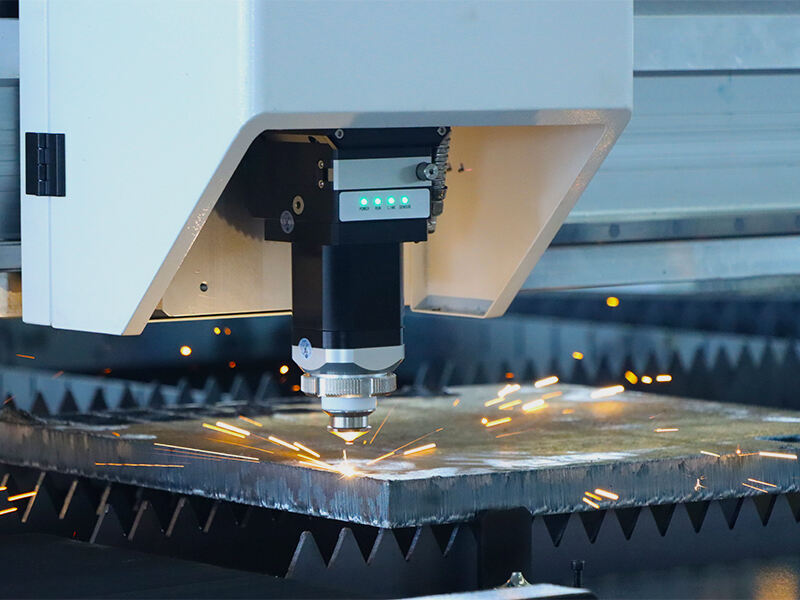
Core Laser Welding Machine Parameters That Directly Control Seam Firmness
Laser Power Density and Focus Spot Size: Maximizing Penetration and Consistency
Laser power density—defined as laser power divided by the area of the focused spot—is the primary driver of penetration depth and seam consistency. To achieve keyhole-mode welding (essential for deep, robust joints), power density must exceed material-specific thresholds. Too low, and fusion remains shallow and inconsistent; too high, and spatter, porosity, or excessive vaporization compromise seam integrity. Modern systems maintain micron-level focus accuracy, with typical spot diameters ranging from 0.1–0.6 mm for sheet metal applications. Authoritative industry guidelines—including ISO 13919-1 and research published in Welding Journal—recommend sustaining power density between 10⁴–10⁶ W/cm² to stabilize the weld pool while ensuring full penetration. Synchronized modulation of power and spot size further compensates for thickness variations, delivering uniform seams vital for structural components like automotive battery trays and aerospace assemblies.
Beam Wobbling and Motion Control: Enhancing Fusion Stability and Gap Tolerance
Beam oscillation—programmed in circular, elliptical, or figure-eight patterns at frequencies up to 500 Hz—significantly improves fusion stability and tolerance to joint imperfections. By distributing heat more evenly across the weld zone, wobbling widens the effective fusion area without raising peak power, reducing sensitivity to fit-up gaps by up to 70%, per peer-reviewed findings from the Society of Manufacturing Engineers’ automotive welding benchmarking study. Real-time seam tracking, integrated with vision-based systems, dynamically adjusts wobble amplitude based on live gap measurements—ensuring consistent bead width even on misaligned or oxidized edges. For dissimilar-thickness joints common in appliance manufacturing, adaptive motion control mitigates thermal imbalances, preventing undercuts and promoting homogeneous metallurgical bonding across the entire seam length.
Joint Design, Fixturing, and Material Preparation for Reliable Laser Welding Machine Output
Butt vs. Lap Joints and Fixture Precision: Preventing Incomplete Fusion and Distortion
Joint geometry fundamentally influences weld integrity. Butt joints demand exceptional alignment—gaps exceeding 0.1 mm risk incomplete fusion and lack of penetration—whereas lap joints offer greater assembly latitude but introduce asymmetric heating that can induce warpage. Precision fixturing is non-negotiable: rigid clamping holds beam focus position within ±0.05 mm, minimizing focal drift-induced inconsistencies. According to a 2023 Fabrication Technology Institute study, inadequate fixturing accounted for 73% of distortion-related defects in thin-gauge automotive welds. Automated positioning systems eliminate manual variability—especially critical for complex geometries where localized thermal stresses may exceed material yield strength and trigger permanent deformation.
Surface Cleanliness and Oxide Removal: Non-Negotiable Pre-Weld Steps for Seam Integrity
Contaminants are among the most common root causes of weld failure. Oil, grease, and moisture vaporize during irradiation, forming pores; surface oxides scatter or reflect laser energy, starving the joint of sufficient heat input. Solvent cleaning followed by mechanical abrasion should achieve surface roughness below Ra 1.6 μm. For aluminum and other reactive alloys, oxide removal must occur within four hours of welding—delayed processing increases porosity incidence by 60%, as documented in Materials Joining Quarterly (2022). Inline plasma cleaning systems, integrated directly into the laser welding cell, provide repeatable, operator-independent surface conditioning. This step prevents weak interfacial fusion zones that can reduce tensile strength by up to 40% in high-reliability applications such as medical device housings.
Validating Seam Firmness: Testing Protocols and Real-World Performance of the Laser Welding Machine
Tensile Shear Testing, Microhardness Mapping, and NDT for Automotive and Precision Manufacturing
Validation begins only after process parameters, joint design, and preparation have been rigorously controlled. Tensile shear testing delivers a quantitative measure of ultimate joint strength—the maximum load a welded assembly withstands before separation—making it indispensable for structural automotive components. Microhardness mapping across the weld centerline, heat-affected zone (HAZ), and base metal identifies localized embrittlement or softening, ensuring metallurgical compatibility and long-term fatigue resistance. Complementary non-destructive testing (NDT)—including ultrasonic inspection and digital radiography—detects subsurface flaws such as porosity, cracks, or lack-of-fusion without part destruction. Together, these methods form an evidence-based validation framework aligned with ISO 15614-1 and AWS D8.8 standards, confirming that laser-welded assemblies meet real-world performance demands for safety-critical and precision-engineered applications.
FAQ
What is laser power density, and why is it important?
Laser power density is the ratio of laser power to the area of the focused spot. It directly affects penetration depth and seam consistency in welding processes.
How does beam wobbling enhance welding results?
Beam wobbling distributes heat more evenly across the weld area, widening the fusion zone and allowing better tolerance to gaps in joint alignment.
What are key factors in joint design for laser welding?
Joint design affects weld reliability. Butt joints require precise alignment, while lap joints are more flexible but may cause heat-induced warping. Accurate fixturing is critical to maintaining integrity.
Why is surface cleanliness crucial before laser welding?
Contaminants like oil, grease, and oxides reduce weld integrity by causing porosity or scattering the laser energy. Proper cleaning and oxide removal improve the fusion quality.
What testing methods validate laser-welded seams?
Validation involves tensile shear testing for joint strength, microhardness mapping for metallurgical compatibility, and NDT methods like ultrasonic inspection for flaw detection.