
 EN
EN
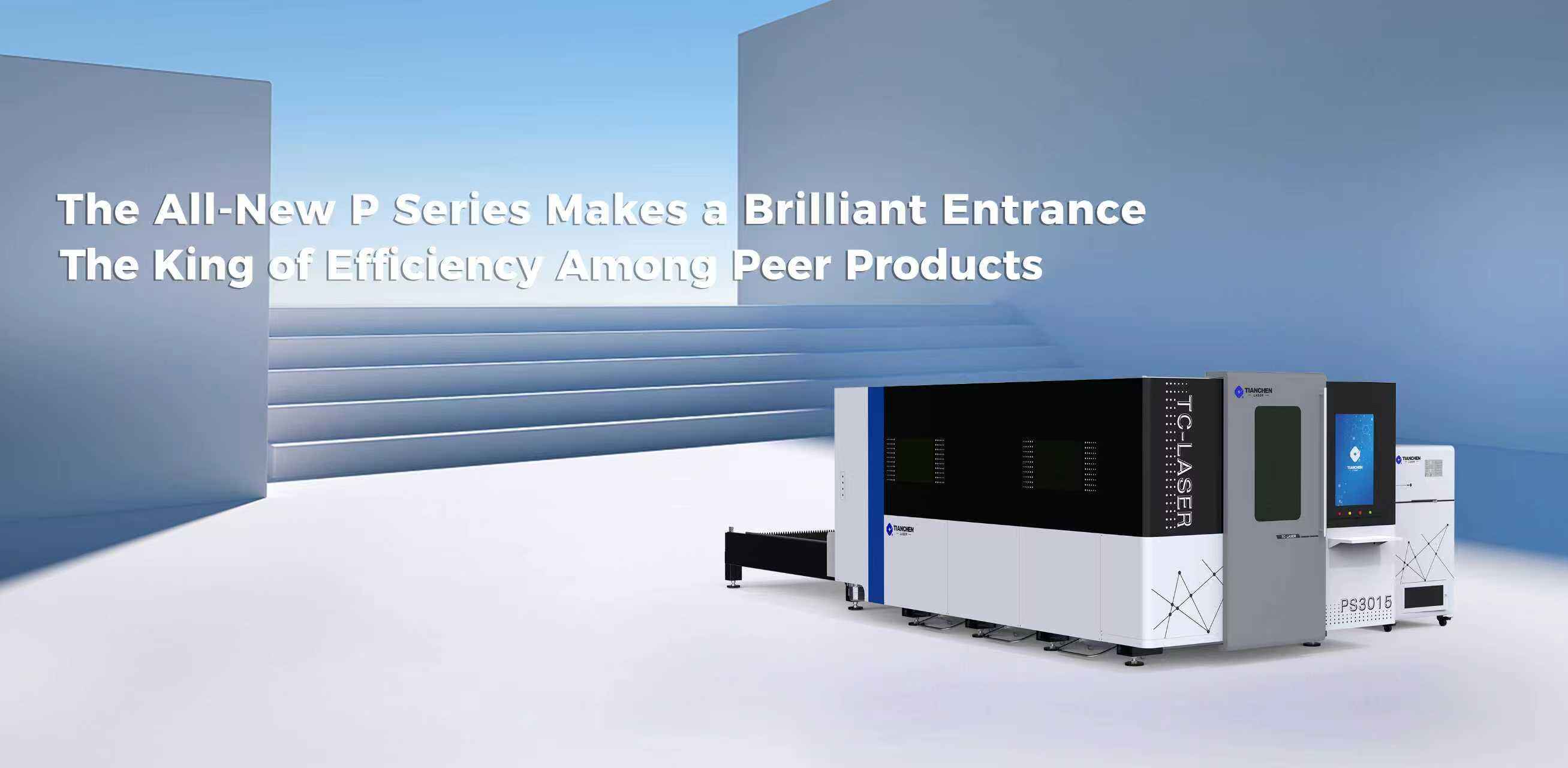
Why Precision Matters: Sub-Millimeter Accuracy in Laser Cutting Machine for Sheet Metal
How ±0.1 mm Tolerances Are Achieved Through Beam Control and CNC Synchronization
Achieving ±0.1 mm accuracy hinges on tight integration between beam delivery and motion control. Fiber lasers maintain exceptional beam quality through precision collimation optics that minimize divergence, enabling a stable, tightly focused spot (<0.1 mm). Simultaneously, CNC-driven servomotors position the cutting head with sub-5-micron repeatability. Closed-loop feedback systems—drawing from thermal sensors, capacitive nozzle height controls, and real-time power monitoring—dynamically adjust laser output and focal position to compensate for material expansion, gas pressure shifts, and mechanical drift. This synchronization prevents error accumulation across complex contours where conventional methods falter. For instance, thin-gauge stainless steel requires pulse frequencies above 10 kHz to suppress heat buildup and edge distortion. Predictive backlash compensation algorithms further ensure micron-level consistency across long production runs.
Kerf Width Consistency and Surface Roughness as Benchmarks of Fine Cutting Performance
Kerf width uniformity—typically 0.1–0.3 mm—is a direct indicator of process stability; variations exceeding 5% often reveal focus drift or inconsistent assist gas pressure. Surface roughness under 3.2 µm Ra reflects optimal beam-material interaction and is routinely verified using contact profilometers. High-performance systems achieve this through dynamic focal length adjustment during piercing, pulse-shaping technology that minimizes melt recast, and adaptive gas flow control that suppresses oxide formation on cut edges.
| Parameter | Acceptable Range | Critical Failure Threshold |
|---|---|---|
| Kerf Width Tolerance | ±0.02 mm | >±0.05 mm |
| Surface Roughness | <3.5 µm Ra | >6.0 µm Ra |
| Heat Affected Zone | <10% material thickness | >25% material thickness |
These metrics are especially critical for load-bearing components: rough or oxidized edges act as stress concentrators, initiating premature fatigue failure. Metallographic cross-section analysis confirms that maintaining surface roughness below 2.8 µm Ra reduces part rejection rates by 38% across aerospace and medical manufacturing benchmarks.
Fiber vs. CO₂ Laser Cutting Machine for Sheet Metal: Technical Trade-Offs for Fine Cutting
Beam Quality, Absorption Efficiency, and Reflective Metal Handling in Real-World Applications
Fiber lasers deliver superior beam quality—characterized by near-perfect Gaussian profiles and M² values close to 1.0—enabling smaller focal spots (<0.1 mm), sharper kerf definition, and smoother edge finishes on thin-to-medium sheet metal (up to 12 mm). Their 1 µm wavelength is strongly absorbed by reflective metals like aluminum and copper, which reflect 70–80% of CO₂’s 10.6 µm energy. As a result, fiber systems cut these materials at 3–5× the speed of CO₂ lasers while consuming 30% less power. In contrast, CO₂ lasers exhibit greater diffraction effects and require frequent optical alignment, limiting their ability to sustain ±0.1 mm tolerances at high speeds.
Reflective metal handling underscores another key distinction: fiber lasers incorporate built-in back-reflection detection and automatic power cutoff, making them inherently safer and more reliable for brass, copper, and anodized aluminum. CO₂ systems rely on external beam dumps and meticulous alignment protocols—adding complexity and downtime risk. Pulse modulation in fiber lasers also suppresses edge burring in conductive alloys, eliminating secondary finishing steps common with CO₂.
| Parameter | Fiber Laser Advantage | CO₂ Laser Limitation |
|---|---|---|
| Reflective Cutting | Integrated safety systems | Requires external beam dumps |
| Energy Efficiency | 30% higher absorption in copper | Significant reflection losses |
| Edge Quality | Near-burr free on thin sheets | Thermal distortion above 6mm |
Operationally, fiber lasers eliminate mirror maintenance, resonator gas replenishment, and associated calibration cycles—reducing unplanned downtime by up to 50% in high-volume environments. This reliability, combined with finer feature resolution and tighter tolerance retention, makes fiber the preferred platform for precision sheet metal applications.
Material-Specific Optimization: Tuning the Laser Cutting Machine for Sheet Metal Types
Aluminum, Stainless Steel, and Mild Steel: Parameter Adjustments for Thermal Conductivity and Reflectivity
Material-specific tuning is essential to leverage the full precision potential of modern laser cutting machines. Aluminum’s high thermal conductivity (205 W/m·K) and reflectivity demand higher peak power (30–50% above stainless steel) and faster traverse speeds to avoid warping and dross. Stainless steel, with lower conductivity (15 W/m·K), retains heat more evenly—allowing slower, more controlled cuts ideal for fine features and intricate contours. Mild steel benefits from moderate speeds and oxygen-assisted cutting to maximize throughput without compromising edge integrity.
Reflectivity management is equally critical: copper-coated optics reduce back-reflection risks by up to 70% when processing highly reflective alloys, preserving beam fidelity and protecting sensitive optical components.
Gas Assist Strategy: When Nitrogen Excels—and When Compressed Air or Oxygen Is Preferable
Gas selection directly governs cut quality, metallurgical integrity, and operating cost. Nitrogen assist—delivered at 12–20 bar—is optimal for non-ferrous metals and stainless steel where oxidation-free, weld-ready edges are required. It consistently delivers surface roughness ≤3.2 µm Ra, meeting stringent standards for visible aerospace or medical components. Oxygen assist leverages exothermic reactions to boost cutting speed by 40% on mild steel thicker than 6 mm, though it introduces an oxide layer requiring post-processing for certain applications. Compressed air serves as a cost-effective alternative for thin-gauge mild steel (<3 mm), balancing acceptable edge quality with reduced consumable costs—though with marginally increased oxidation versus nitrogen.
Design-to-Cut Best Practices: Maximizing Output Quality from Your Laser Cutting Machine for Sheet Metal
Geometric Considerations—Corner Radii, Minimum Hole Size, and Nesting for Minimal Heat Distortion
Thermal management begins at the design stage. To prevent localized overheating and distortion, maintain internal corner radii ≥1.5× material thickness—sharp corners concentrate thermal energy, increasing warping risk in aluminum and stainless steel. Minimum hole diameters should exceed material thickness; undersized holes trap molten material, raising dross formation by 40% in validation trials. Nest parts with spacing ≥2× material thickness to enable effective heat dissipation between features. Tight nesting without adequate gaps elevates local ambient temperature by 70–120°C, degrading edge quality and destabilizing kerf consistency. Strategic spacing ensures thermal energy disperses between cuts—preserving dimensional accuracy and supporting sustained ±0.1 mm tolerance performance across the entire sheet.
FAQ
Why is precision important in laser cutting machines for sheet metal?
Precision is crucial for ensuring dimensional accuracy and quality in complex metal parts, reducing waste, and meeting stringent industry standards, particularly for aerospace and medical applications.
What are the main advantages of fiber lasers over CO₂ lasers in metal cutting?
Fiber lasers offer superior beam quality, higher energy efficiency, better handling of reflective metals, and reduced maintenance, leading to improved cutting speed and precision.
How do gas assist strategies impact laser cutting efficiency?
Gas assist strategies can significantly influence cut quality and operating costs, with nitrogen providing oxidation-free edges for non-ferrous metals, oxygen boosting cutting speed for thick mild steel, and compressed air offering a cost-effective option for thin-gauge steel.
What are key design considerations for laser cutting sheet metal?
Design considerations include ensuring adequate corner radii, appropriate hole sizes, and strategic nesting to minimize heat distortion and maintain precision.
Table of Contents
- Why Precision Matters: Sub-Millimeter Accuracy in Laser Cutting Machine for Sheet Metal
- Fiber vs. CO₂ Laser Cutting Machine for Sheet Metal: Technical Trade-Offs for Fine Cutting
- Material-Specific Optimization: Tuning the Laser Cutting Machine for Sheet Metal Types
- Design-to-Cut Best Practices: Maximizing Output Quality from Your Laser Cutting Machine for Sheet Metal
- FAQ