
 EN
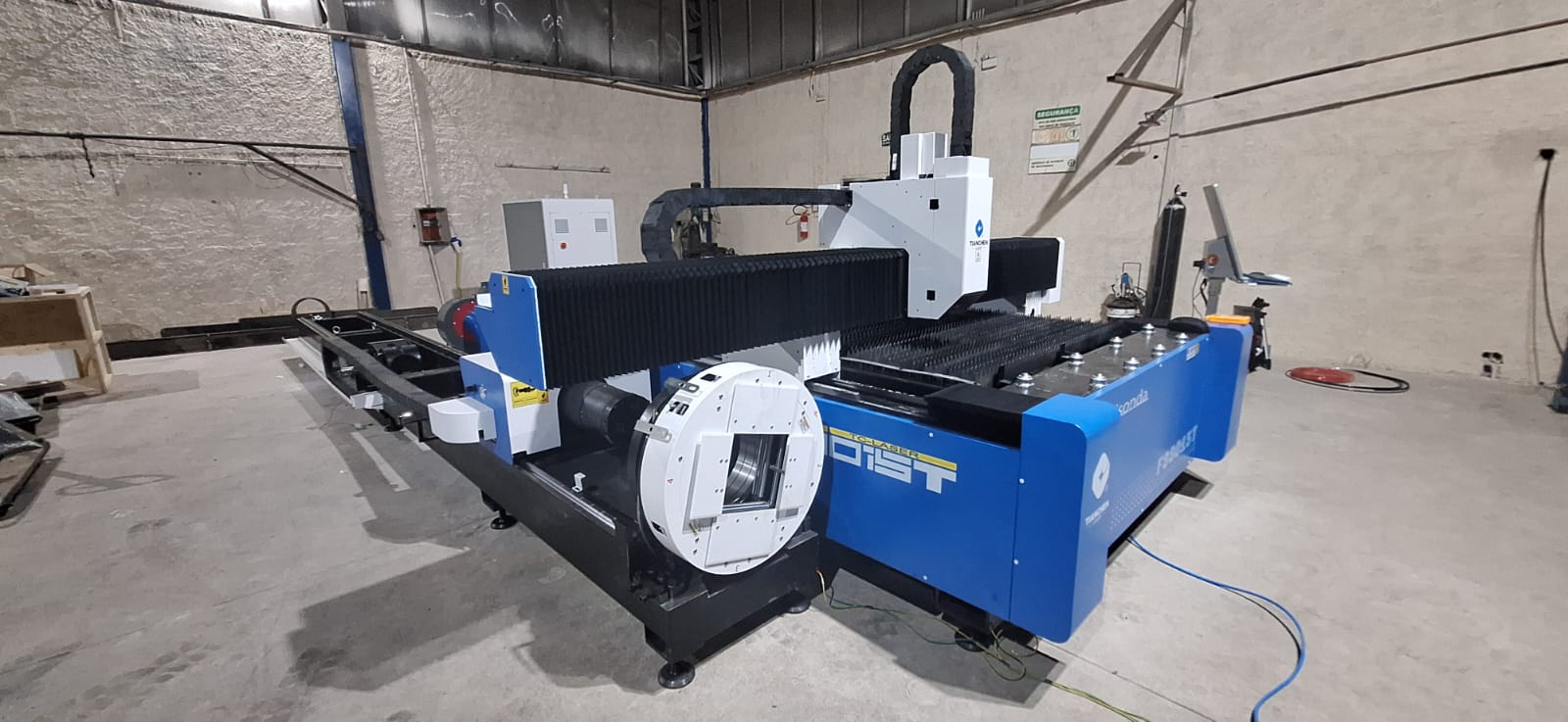
Precision Metal Laser Cutting for Complex Geometries in Heavy Machinery
Beam control and motion synchronization for large-format accuracy
Heavy machinery components often span several meters—demanding tight dimensional tolerances across full bed lengths. Achieving this requires millisecond-level synchronization between laser beam positioning and gantry motion. Modern systems use linear motors paired with high-resolution encoders to precisely coordinate the cutting head and workpiece, minimizing corner rounding, edge taper, and path deviation. Adaptive optics maintain a consistent focal spot despite variations in plate thickness or flatness, while closed-loop feedback continuously monitors cutting speed, assist gas pressure, and material temperature. When sensors detect thermal drift or surface irregularities, the controller dynamically adjusts the beam path in real time. Five-axis cutting heads add tilt capability for precise bevels—but only when rotation and translation are fully synchronized; otherwise, bevel angles vary along the contour. Digital twin pre-verification identifies potential path conflicts before cutting begins, preventing costly collisions on large plates. The result is repeatable hole placement and clean, dimensionally stable contours that simplify welding and assembly—especially critical for thick-section parts where maintaining beam waist stability over long traverses prevents kerf widening at edges. Rigid machine frames and tuned acceleration profiles further suppress vibration, enabling large-format accuracy without hand finishing or rework.
CAD/CAM-driven path planning for 3D contours and nested complex parts
Complex heavy machinery parts—brackets, flanges, formed profiles—are rarely planar. CAD/CAM software translates solid models directly into optimized toolpaths that follow curved surfaces, accommodate beveled edges, and manage multi-axis motion. It intelligently assigns lead-ins, pierce points, and cutting sequence to minimize thermal stress and distortion. For nested layouts, advanced algorithms group similar geometries, rotate parts for maximum sheet utilization, and factor in remnant skeletons from prior cuts—significantly improving yield over time, especially with costly wear-resistant steels. Path planning also accounts for cut direction and heat accumulation: common-line cutting, for instance, shares a single kerf between adjacent parts, reducing total travel and boosting throughput on thick plate. The resulting G-code drives smooth acceleration/deceleration curves—eliminating dwell marks at sharp corners. Digital validation ensures collision-free execution before metal is cut, preserving expensive plate stock. The outcome is tightly fitting components requiring minimal grinding or shimming—accelerating downstream fabrication.
Metal Laser Cutting of Thick Materials: Balancing Quality, Speed, and Distortion
Nitrogen vs. oxygen assist gas selection for 30–60 mm mild steel
For 30–60 mm mild steel, assist gas selection fundamentally shapes edge quality, cutting speed, and post-processing requirements. Oxygen leverages an exothermic reaction to boost energy input, enabling faster travel speeds—but leaves an oxidized, rough edge that typically demands grinding or painting before welding or finishing. Nitrogen acts inertly, ejecting molten material cleanly to produce a bright, oxide-free edge with minimal dross—ideal for fatigue-critical or visible surfaces—though it generally requires higher laser power and gas pressure, slowing the process unless compensated.
| Parameter | Oxygen assist | Nitrogen assist |
|---|---|---|
| Cutting mechanism | Exothermic oxidation | Inert melt ejection |
| Edge finish | Oxidized, may need cleaning | Bright, oxide-free |
| Speed on 30–60 mm mild steel | Faster at equal power | Slower unless power increased |
| Main cost driver | Secondary finishing | Higher gas and power consumption |
In heavy machinery applications, oxygen is commonly used for internal structural plates where aesthetics and fatigue performance are secondary. Nitrogen is preferred for load-bearing weld joints, exposed edges, or parts subject to cyclic loading—directly influencing both productivity and long-term weld integrity.
Pulsed fiber laser modulation and adaptive cooling to suppress thermal distortion
Pulsed fiber laser modulation delivers energy in controlled bursts rather than continuously, limiting heat accumulation in thick sections. On 30–60 mm plate, this reduces the heat-affected zone (HAZ), mitigates edge hardening, and improves dross ejection at the bottom of the kerf. Adaptive cooling maintains stable resonator and beam path temperatures during extended production runs—preserving focal length consistency and preventing workpiece bowing or twisting. High-frequency pulse modulation—synchronized to feed rate—allows operators to fine-tune peak power and duty cycle: too few pulses cause striations; excessive pulsing reintroduces continuous heating effects. Integrated thermal compensation systems go further, adjusting focus position and assist gas flow in response to ambient or workpiece temperature shifts. Together, these features stabilize kerf width, ensure square cuts in a single pass, and eliminate the need for post-cut straightening—critical for heavy machinery components requiring precise fit-up and repeatable assembly.
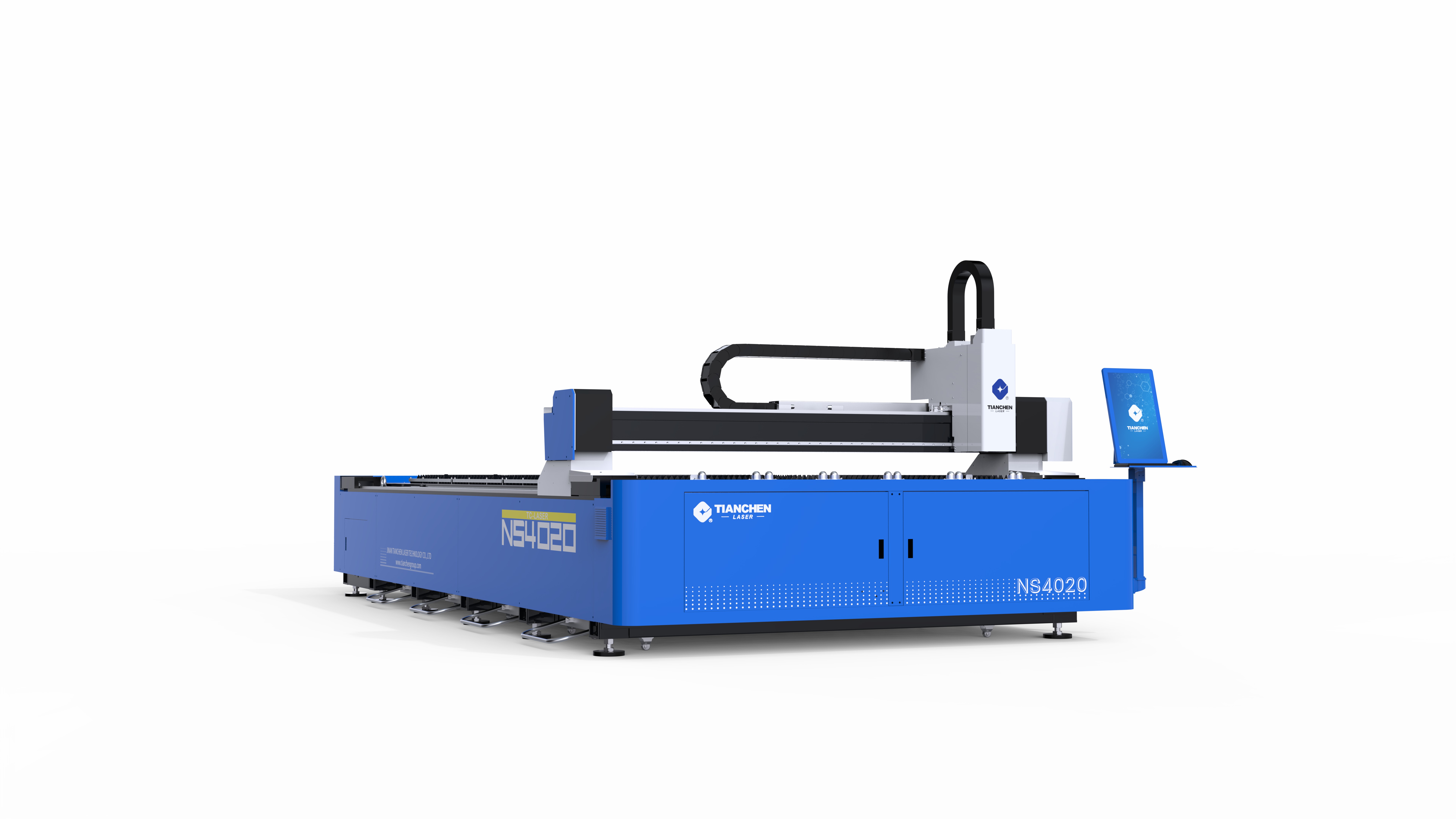
System Rigidity and Thermal Stability: Enabling Reliable Metal Laser Cutting at Scale
Gantry design, granite bases, and real-time thermal compensation for heavy-duty operation
Large-format metal laser cutting places extraordinary mechanical and thermal demands on the system. A rigid gantry—featuring dual-drive motors, precision ground rails, and structural bracing—ensures the cutting head remains perpendicular to the workpiece across multi-meter travel ranges. Without this stiffness, inertia-induced vibration causes dimensional drift, limits cutting speed, and degrades edge consistency. Granite or polymer-mineral composite bases provide exceptional mass and damping for low-frequency vibrations, while their near-zero thermal expansion helps maintain geometric stability during prolonged operation.
Thermal drift remains one of the most persistent challenges at scale: heat generated by motors, drives, and high-power lasers can shift optical alignment and focal position. Real-time thermal compensation counters this using distributed temperature sensors and model-based control software that dynamically adjusts motion commands and focal offsets as components expand or contract. Rather than relying on cooldown cycles, the system corrects for thermal growth continuously—even as ambient temperature fluctuates by several degrees. For heavy-duty production, this triad—gantry rigidity, thermally stable base, and active thermal correction—is foundational to delivering repeatable, high-fidelity complex geometries without manual intervention or rework.
FAQ
What is the significance of adaptive optics in laser cutting?
Adaptive optics maintain a consistent focal spot despite variations in plate thickness or flatness, ensuring precise cuts and minimizing distortions.
Why is nitrogen preferred over oxygen for certain applications?
Nitrogen provides an oxide-free edge and is ideal for load-bearing weld joints or visible parts where aesthetics and fatigue performance are critical, even though it requires higher power and gas pressure compared to oxygen.
How does pulsed fiber laser modulation reduce thermal distortion?
Pulsed fiber laser modulation limits heat accumulation by delivering energy in bursts, reducing the heat-affected zone (HAZ) and improving overall cutting precision.
What is the role of CAD/CAM software in heavy machinery part production?
CAD/CAM software generates optimized toolpaths, minimizes thermal stress and distortion, and ensures collision-free cutting for efficient and precise production of complex metal components.
How do gantry designs contribute to cutting accuracy?
Rigid gantry designs with dual motors and structural bracing reduce vibration, maintain positional accuracy, and ensure consistency in cutting across large formats.
Table of Contents
- Precision Metal Laser Cutting for Complex Geometries in Heavy Machinery
- Metal Laser Cutting of Thick Materials: Balancing Quality, Speed, and Distortion
- System Rigidity and Thermal Stability: Enabling Reliable Metal Laser Cutting at Scale
-
FAQ
- What is the significance of adaptive optics in laser cutting?
- Why is nitrogen preferred over oxygen for certain applications?
- How does pulsed fiber laser modulation reduce thermal distortion?
- What is the role of CAD/CAM software in heavy machinery part production?
- How do gantry designs contribute to cutting accuracy?